



As the largest employer in Britain, the NHS has a huge role to play in reducing carbon emissions.
Currently responsible for around 4% of England’s total carbon emissions[1], the organisation has ambitious plans to become the first carbon neutral health system in the world.
Setting out those plans in the Delivering a Net Zero NHS report, Simon Stevens, the then Chief Executive of the NHS, explained: “The climate emergency [..] is also a health emergency. Unabated it will disrupt care and affect patients and the public at every stage of our lives.
“With poor environmental health contributing to major diseases, including cardiac problems, asthma and cancer, our efforts must be accelerated.”
The NHS’ estate (its buildings) are responsible for 15% of the organisation’s total carbon emissions, and it is estimated that engineering solutions to upgrade those buildings could result in a reduction in emissions of more than 473 kilotonnes of carbon dioxide equivalent (ktCO2e).
The organisation will need to be clearer than ever on how its energy is being used and where it is being wasted. Which is where smart sensors will be vital, helping organisations to spot issues and make proactive changes.
But making those changes will be no mean feat, many NHS trusts are housed in old buildings, which have often become dilapidated due to limited maintenance budgets. Transforming these into energy efficient buildings, fit for the future, will require significant investment, but smart monitoring at an early stage of the process can help to ensure the right areas are focused on, providing information on exactly how and where energy can be saved.
In the longer term, installing smart sensors and monitoring throughout the revamped buildings will reap huge benefits, ensuring energy is used as efficiently as possible, reducing carbon usage and expenditure.
The report states: “A range of socio-technical interventions will be required to optimise the way the NHS uses its buildings. Intelligent, real-time energy monitoring and control,
including the use of artificial intelligence, would contribute up to 2.3% of the total
required reduction in carbon emissions.”
What are smart sensors?
Smart technology is the name for devices connected to the internet that can collect and transmit data to a centrally stored hub. This hub can be local to the organisation but, increasingly, will be part of the cloud – information stored on a secure area of the internet, without the need for external servers.
Typically, the technology consists of sensors and receivers, which can measure a range of different parameters including temperature, air quality, space utilisation or how much power is running through a piece of equipment.
Are they difficult to fit in old buildings?
While there are a number of new hospital buildings being planned for the coming decades, the vast majority of the work to reduce the carbon emissions from the NHS estate will focus on existing buildings.
Choosing wireless smart sensors avoids expensive retro-fitting costs, as sensors can simply be stuck to the walls or desks in areas, with no wiring needed.
What can smart sensors measure?
Smart sensors can track a number of factors that will help to ensure the most efficient use of NHS buildings and equipment:
Energy usage: CT clamps or current sensors are placed on cables and monitor how much power is running to and through them. They can measure energy consumption at a circuit, zone or machine level. This is useful for flagging up potential breakdowns before they occur as unusual consumption patterns could mean a piece of equipment is not working as efficiently as it should be.
Temperature: Temperature sensors can be placed within a room to ensure it is at a safe and comfortable temperature for occupants. The data from these can be fed into building management systems which are linked to HVAC systems, and will ensure areas are being kept at a consistent temperature and not over-heated.
Occupancy: PIR sensors or motion sensors canshow you whether a room, desk or cubicle is being used to give an overview of peak usage or low-demand times, helping ensure that every part of a building is used as efficiently as possible. They may, for example, highlight buildings or rooms that could be closed, or areas where heating does not need to be on all the time.
How can this benefit the NHS?
Monitoring energy usage across the organisation in this way has a number of benefits:
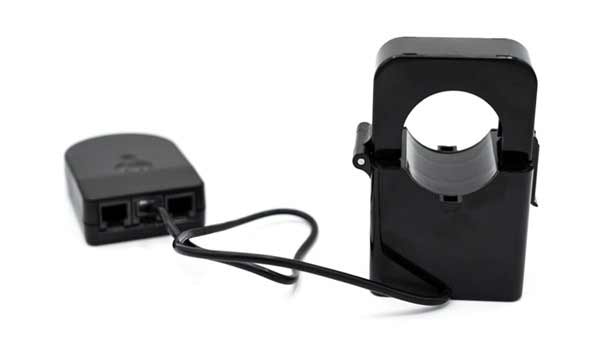
- Continuous monitoring in real-time: Using smart technology give a continuous view of the energy use within a building. Data collected by the sensors is fed back to a central dashboard and, at any given point in time, you can see the energy usage picture across your buildings or organisation, meaning you always have a clear picture of your energy consumption. This is particularly useful for the NHS where individual trusts often have multiple buildings spread across numerous sites.
- Ability to make instant changes: You can react instantly to implement changes to reduce energy usage as you have an overview of areas of high energy usage. It helps to identify things like machines left running when they shouldn’t be or equipment that isn’t performing as efficiently as it should be and may need maintenance.
- Helps ensure a consistent, reliable power supply: By monitoring the energy flowing into and out of machinery you can spot potential issues before they arise, for example surges in demand at particular times, and put plans in place to change these.
- Reporting and planning becomes easier: Data produced by the systems means you can easily produce reports on energy usage for your organisation – something that will be crucial when being measured against the NHS’ ambitious energy-saving targets. Being able to monitor usage trends also means you can look at specific machinery, rooms or offices and develop action plans for energy reduction.
- It helps with staff engagement: Being able to produce data which shows people exactly what impact changes are having is a useful tool in making sure everyone in the business plays their part in reducing energy use.
- It’s flexible: Using cloud computing systems allows organisations to flex their capacity as needed. It means you can scale up and down as your needs change without having spent vast sums of money on expensive IT equipment.
Is it secure?
Understandably, there are concerns about the security of smart sensors, particularly in an organisation like the NHS that handles such sensitive data.
Facilities managers should look for smart sensors that do not feed into main IT systems and transmit their data via 4G.
They’ve already been proven to work successfully in several NHS organisations including Mid Yorkshire Hospitals NHS Trust who have been using Pressac’s occupancy sensors as part of a new space management system installed by intelligent workspace software provider UMA. The sensors have enabled the Trust to see how their spaces are being used and take a much more proactive response to managing them, creating nicer spaces for their staff but also making energy saving efficiencies in the process.
- If you’re part of an NHS trust looking to find out more about smart sensors and how they can help you with your carbon-reduction plans contact our expert team for advice.
Explore more at https://www.pressac.com
[1] https://www.england.nhs.uk/greenernhs/wp-content/uploads/sites/51/2020/10/delivering-a-net-zero-national-health-service.pdf
