


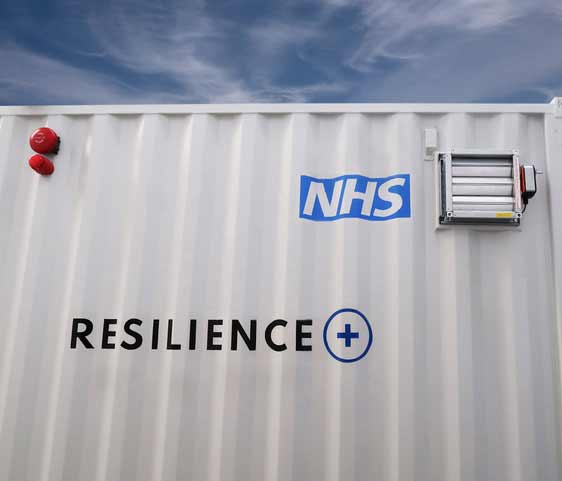

Alastair Morris, Chief Commercial Officer at Powerstar, looks at the vital role Battery Energy Storage Solutions (BESS) play in a decarbonised public sector.
A landmark investigation by The British Medical Journal[1] warns that NHS Trusts will be forced to find up to an additional £2million per month this winter, while energy prices continue to soar. As the BMJ reports, and Rory Deighton, senior acute lead at the NHS Confederation states, the energy crisis facing the sector “isn’t an abstract problem, as the gap in funding from rising inflation will either have to be made up by fewer staff being employed, longer waiting times for care, or other areas of patient care being cut back.” In this context, the latest round of the Public Sector Decarbonisation Scheme (PSDS), offers desperately needed support for organisations looking to invest in mitigating the worst impacts of the crisis and in futureproofing Estates and budgets against energy volatility.
To reduce reliance on fossil fuels, the focus of Phase 3b is on the upgrade of heating systems, decarbonising through a shift towards cleaner – and cheaper – renewable energy. BESS technology plays a pivotal role here, both in maximising flexibility of on-site renewables, and in helping organisations offset the additional energy costs that can come from moving to sustainable, cleaner, heating systems. NHS Trusts have already been extremely successful in securing funding from the previous phases of PSDS funding, incorporating energy storage and renewable power generation alongside modern, sustainable, heating technology. Leeds Teaching Hospitals NHS Trust successfully bid for £13m for such measures; London North West University Healthcare NHS Trust secured £10m for heat pump, lighting upgrade, solar and battery installation, while Cambridge University Hospitals NHS Foundation Trust was awarded nearly £500,000 to upgrade the Rosie Maternity Hospital with a new air source heat pump, battery storage and electrical upgrades to ensure the lowest possible carbon emissions from the new heating system. As these examples of funded decarbonisation projects indicate, the combination of new heat pump technology is far more economical – and far more sustainable – when linked to solar generation and battery energy storage to offset any increased electrical demand. This is where the case for investment in BESS – especially if this can be supported by PSDS funding – is most compelling, for the UK’s largest employer and its most vital sector.
Renewable energy production is inherently inflexible, reliant as it is on weather conditions for power generation. Where Trusts invest in BESS, they can store energy generated on-site, generally from solar arrays, for use when most needed. Particularly relevant with current and forecast energy prices, this can reduce the requirement for purchase from the Grid at peak times, allowing Trusts to buy – and store – energy when prices are lower for use at peak times. BESS is also an extremely useful tool when looking at Electrical Vehicle (EV) charging, both for a decarbonised fleet and as employees and patients move to EV transport, since the same principles apply – flexible charging and energy storage, making the most of on-site generation and off-peak purchasing. Perhaps, though, the most significant benefit of a BESS in the current climate, relates to energy security, given the instability of power from the Grid that we are all facing this winter. Where the usual back-up power for emergencies has been an Uninterruptible Power Supply (UPS), the drawbacks of this older technology are well-known and increasingly problematic: capacity losses of 10 – 15%, and an asset with no additional benefit other than its role in emergencies. With a modern BESS, the losses are as little as 3 percent and, in addition to the flexibility for energy storage and purchase, it can provide Trusts with new revenue stream through engaging with Grid Services and Demand Side Response, helping to shore up the Grid’s own supply for general usage – both domestic and commercial – while also reducing pressure on the Trust’s budget through income generation and lower energy bills. For an average NHS Trust, this can be around £100,000 of new revenue per year. As the first HTM-06-01 compliant commercial BESS with fast-switching UPS capabilities and the ability to access Grid Services, Powerstar’s BESS has a typical lifespan of 10-15 years, representing a significant improvement and ROI over a traditional UPS, where batteries need replacing every seven to ten years.
At a time when The BMJ is reporting predicted energy bill rises such as Nottingham University Hospitals NHS Trust, who are budgeting for a 214% increase in gas and electricity costs for 2022-23, the coming months look stark, without short-term investment to secure longer-term energy security and affordability.
For support in understanding the opportunities of PSDS funding for your organisation, contact Powerstar:
W: www.powerstar.com E: info@powerstar.com T: 0333 230 1327
