


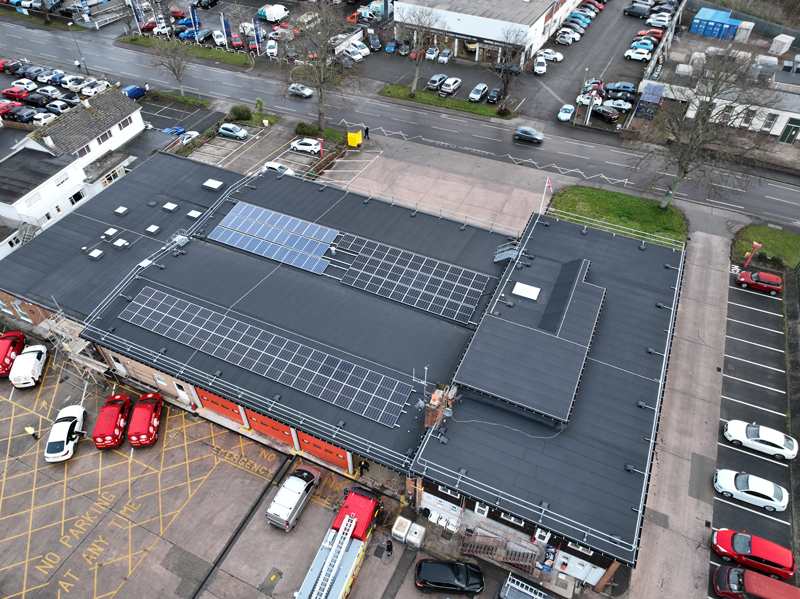
Roof refurbishment and solar PV are typically planned by different teams, against different budgets, on different timelines. Facilities management owns the roof. Sustainability or energy management owns the solar target. The two rarely sit in the same capital planning conversation until a solar feasibility study is already underway, at which point the roof is treated as a fixed condition rather than a variable to be assessed.
This sequencing creates a specific and avoidable risk. A solar yield analysis tells an estate what a roof could generate. It says nothing about whether the roof will survive long enough to generate it. If a roof is closer to the end of its service life than the solar panels are to the end of theirs, the panels will eventually need to be removed and reinstalled to allow the roof beneath them to be repaired. That means a second capital outlay, a second period of disruption, and lost generation while the system is offline, on top of whatever the original solar business case promised.
This is not hypothetical. At Carr Junior School, a roof condition survey commissioned alongside a solar feasibility study found cut-edge corrosion across the existing steel roof panels severe enough that the roof would not have outlasted a newly installed solar system. At Towers School, a roof condition survey commissioned during a wider refurbishment project uncovered the same underlying issue that, if left unaddressed, would have undermined any solar investment made on top of it. In both cases, the roof and solar works were combined into a single programme once the roof’s condition was properly understood, rather than being treated as sequential projects.
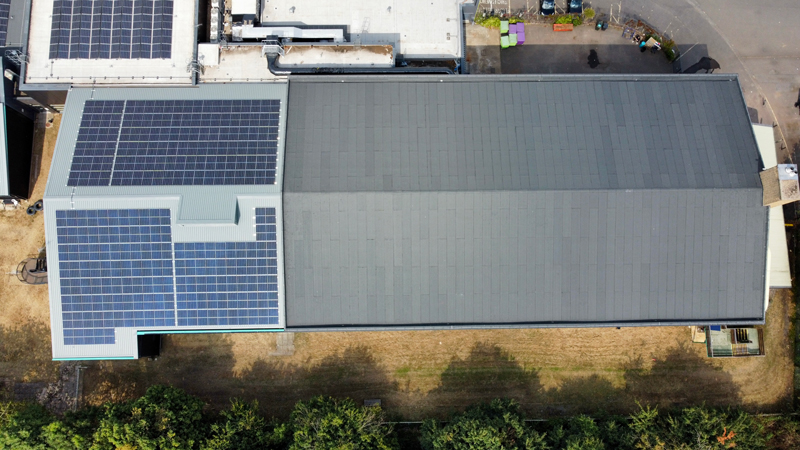
The pattern holds outside education too. At Hambridge industrial estate, a combined roof overclad and solar installation, delivered under a single guarantee, produced first-year energy savings of £13,500 and a projected cash flow of £1.2 million over 25 years, while diverting 37 tonnes of asbestos from landfill through safe encapsulation. None of that return would have been available on the original timeline had the roof and solar elements been procured separately.
What links these projects is not the buildings but the sequencing. In each case, a roof condition survey and a solar yield analysis were carried out together, before either project was specified, rather than the roof being assumed suitable because it was structurally sound enough to bear the weight. A roof can be structurally capable of supporting solar panels yet still be unfit to host them for their expected lifespan if the waterproofing or cladding beneath is degrading.
Combining the two also changes the guarantee position. Where roof and solar are specified and installed as one programme, both can sit under a single guarantee covering design, materials, and installation. That removes the ambiguity that arises when a roofing contractor and a solar installer are each responsible for interdependent parts of the same building envelope, and it means a single point of contact if a defect occurs, rather than two parties disputing which system is at fault.
For estates teams building an internal business case, life cycle costing provides the evidence. Set out in BS/ISO 15686-5:2017, it accounts for construction, renewal, operation, maintenance, and end-of-life costs using net present value, and consistently shows that a combined programme reduces total cost of ownership compared with treating roof and solar as separate line items years apart.
The practical implication for any estate with both roof and solar decisions on its capital plan is to commission the roof condition survey and the solar yield analysis together, before either is scoped, regardless of whether the two projects currently sit in the same budget line. What that survey finds should determine the sequencing, not the other way round.
Garland UK carries out both assessments together as standard roof project practice, a roof condition survey alongside a solar yield analysis, so estates teams are working from one evidence base rather than two reports arriving on separate timelines.

This article appeared in the July/August 2026 issue of Energy Manager magazine. Subscribe here.
