


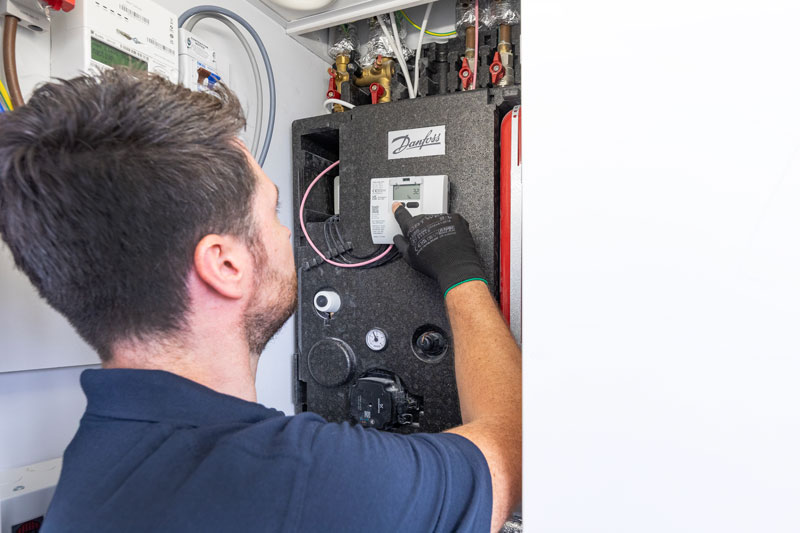

Adam Newman, Head of Technical Solutions at Insite Energy explains what benefits AI could offer the industry at a crucial time.
The UK’s heat network sector reached a milestone in July. The first tranche of reporting under the new heat network regulations is now due, giving energy managers a glimpse of the data-heavy future facing the sector. With the Heat Network Technical Assurance Scheme (HNTAS) expected to require even more detailed operational reporting, many operators are already seeing the scale of the challenge ahead.
Under draft HNTAS requirements, networks are moving from occasional billing reads to continuous, granular monitoring. Six core elements are covered, running from the energy centre through to the point of use. Five and 30-minute data collection, alongside the monitoring of flow temperatures, volume and a wider range of performance metrics currently proposed, will generate far more data than most legacy systems were built to handle.
A step change in data demands
One or two meter readings a month used to be enough to satisfy billing requirements. Visibility beyond that was limited – spotting an outage early, or tracking consumption trends in any detail, typically meant paying for external software to extract and interpret the data.
HNTAS will shift the dial somewhat. Building software to manage this new level of detail from scratch used to take the best part of a year, but what if there was another way?
AI has the power to drastically cut that lead time down. Now, functional tools can be developed in a matter of days. Only the front-end design work, i.e. the parts a team member sees and interacts with, take up any meaningful time beyond that.
We engage with AI throughout our daily lives, often without realising it. So why not apply it to the systems heating our homes, and harness its benefits there?
From spreadsheets to live diagrams
This was my thought process when I first attempted just that. An AI-powered dashboard built entirely by our own team, which is now in the beta testing phase and currently being used internally, Vista offers a centralised view of the metering data we hold across all teams.
What started as a solo project has since grown into a tool that replaces static spreadsheets and periodic reports with a live dashboard that shows every installed meter across a site, from individual blocks through to offices and commercial units.
Full historical Insite data, including any technical faults or gaps, for each meter is available to the team. A portfolio view sits alongside this, allowing entire estates to be assessed holistically as opposed to one site at a time.
Gap analysis and assurance work, once carried out manually, now happens live. Raw data is turned instantly into site diagrams that support internal teams with site configuration, residential onboarding and billing queries.
Speed is another important consideration. Under the old monthly billing cycle, an outage could go unnoticed for up to 30 days. Vista flags a missed data transmission within two hours, giving teams the chance to resolve issues long before they show up as hidden heat loss or a compliance gap.
What this means for energy managers
The benefits of an AI-incorporating approach go beyond compliance paperwork – a network running efficiently, with full data completeness, uses less energy to deliver the same output. That has a direct bearing on carbon emissions as well as cost; two priorities that sit high on many energy managers’ agendas.
While Vista is still in the beta phase, its value lies less in the specific product and more in what it represents: a working example of how AI can be applied to a genuine operational problem, built quickly and shaped around the expected regulatory requirements.
Other operators are likely to reach similar conclusions: having all metering data in one place supports clients as well as internal teams. AI-assisted tools, whether developed internally or sourced externally, offer a practical route to this.
There is also a longer-term regulatory dimension worth considering. HNTAS is unlikely to be the last scheme to demand this level of granular reporting, and the systems put in place now will need to adapt as requirements evolve. Tools built with flexibility in mind stand a better chance of keeping pace compared to bolted-on solutions made for a single purpose.
As HNTAS moves from consultation to enforcement, the service providers best placed to support compliance will be those who can ensure data completeness and confidence. Energy managers who oversee multiple sites will require that reassurance, whatever the regulations require at any one time.
This article appeared in the October 2026 issue of Energy Manager magazine. Subscribe here.
