Salix delivers decarbonisation work across the UK and has now secured silver status as a Carbon Literate Organisation

Kevin Holland

Salix Finance, which supports governments across the UK achieve net zero targets, is celebrating after being accredited as a silver Carbon Literate Organisation by The Carbon Literacy Project.

The award recognises commitment to equip teams with the knowledge and skills to actively reduce their carbon emissions and to contribute to a net zero future.

To achieve this accreditation team members from across the organisation completed carbon literacy training.

Achieving silver status fits with the Salix mission to โ€˜help save the planetโ€™ and the leadership provided in decarbonisation for other public bodies, as well as sustainability in every aspect of the business.

We hope it will serve as inspiration for other public sector organisations to follow.

Going forward, Salix remains dedicated to helping organisations with the tools they need to reduce emissions at a personal, community, and organisational level.

Salix chief executive, Kevin Holland, said: โ€œWeโ€™re on a mission to help save the planet, supporting public sector organisations to reduce their environmental impact.

โ€œIn order to provide leadership in this sector, we want to invest in our people to continually build the knowledge and skills they need.

โ€œThatโ€™s why weโ€™re committed to carbon literacy training for everyone here.

โ€œIโ€™m very proud weโ€™ve been recognised with silver status by the Carbon Literacy Project.โ€

Carbon literacy consultant, Georgina Patel, said: โ€œSalix is focused on supporting clients with decarbonisation.

โ€œIt has also been very clear that it is also serious about reducing its own organisational carbon footprint.

โ€œThrough Carbon Literacy training, Salixโ€™s employees have fully embraced their learning about the climate crisis we all face, and to understand what that means to them as individuals and in their job roles.โ€

The Carbon Literacy Trust was formed in September 2013.  It is incorporated as a Charitable Incorporated Organisation (CIO).

The Trustโ€™s aim is to advance the education of the public in the conservation, protection and improvement of the physical and natural environment through the dissemination of carbon literacy.  It offers training to organisations and individuals.

Delivering the UKโ€™s Energy Transition: A Path to Clean Power

Image by Nicole Streit from Pixabay
Sonia Quiterio

Sonia Quiterio, Director of New Business, Conrad Energy.

Amidst the crackle of November fireworks, the National Energy System Operator published a significant report, offering advice to Government on what needs to be done to realise its 2030 clean power ambition. Though the target is achievable, the report notes it will nonetheless โ€˜push the limitsโ€™ of what is feasible, necessitating not only significant annual investment and planning system reforms, but โ€“ crucially – upgrades to the grid, too.

The last point is instructive and reflects the critical moment the UK has reached in its energy transition. Generating more electricity from renewable sources is one thing, but it is only part of the solution. Indeed, to fully realise the benefits of a net-zero energy system, we must modernise the electricity grid, accelerate storage deployment, and invest in new technologies that maintain system stability. This is how the UK can achieve the energy transition while ensuring security, affordability, and reliability.

The first priority is expanding and upgrading grid infrastructure. After all, the UKโ€™s electricity network was designed for a centralised system where large fossil fuel power stations distributed energy across the country. Today, the picture is decidedly different, with the challenge now being to integrate thousands of renewable energy projects efficiently and ensure that electricity flows smoothly from where it is generated to where it is needed.

Meeting this fresh challenge may require faster access to grid connections, reducing the delays in new renewable, stability and storage projects coming online. At the same time, upgrading power lines to move clean energy across the country may be required to provide stronger transmission capacity along with the deployment of smart grid technology โ€“ using AI and real-time data to balance supply and demand efficiently, for instance โ€“ will help support the grid.

In short, by investing in a more flexible, responsive grid, the UK will be able to ensure that clean energy can be delivered at scale without bottlenecks or delays.

The second key focus is energy storage. Renewables generate electricity when the wind blows and the sun shines, but demand does not always align with supply. To square this particular circle, expanding battery storage capacity will be essential to ensure that clean energy is available when it is needed. Batteries store surplus electricity during periods of high generation and release it back into the grid when demand rises, reducing reliance on non-renewable sources.

New market conditions and system needs must support faster deployment of battery projects, creating the right incentives for investment in both large-scale grid storage and smarter distributed systems that can provide flexibility at local levels. The UK has already made progress in this area, but to reach its clean power targets, battery deployment must scale up significantly in the coming years.

Another crucial part of the transition is maintaining grid stability. Historically, synchronous fossil fuel plants played a key role in keeping the electricity system stable by providing inertia: a force that helps prevent sudden frequency changes. As these plants close, new technologies must take their place to ensure the grid remains secure.

Happily, the UK is already leading the way in deploying clean stability solutions, including synchronous condensers OCGT & CCGT retrofit – 0MW solutions; grid-forming battery inverters; and real-time frequency response. Scaling up these technologies will ensure that the UK can transition to 100% clean power without compromising reliability and stability of the UK electricity system

Achieving the energy transition is not just about reducing emissionsโ€”it is also a huge economic opportunity. The UK has the chance to become a global leader in clean energy technology, grid innovation, and battery storage, creating thousands of high-skilled jobs and attracting investment. By modernising infrastructure and accelerating the deployment of new technologies, the UK will build a secure, affordable, and resilient energy system fit for the future.

And this cuts to the heart of the issue: the UK is facing a renewable energy transition, not a renewable energy moment. To stay on track for clean power by 2030, the UK must look beyond renewable energy generation, modernising the electricity grid, accelerating storage deployment, and investing in new technologies. By acting decisively, the UK will not only meet its clean energy targets but could help set the standard for the worldโ€™s energy transition.


This article appeared in the April 2025 issue of Energy Manager magazine. Subscribe here.

Heat networks: A key solution for decarbonising heat

Davide Natuzzi

Davide Natuzzi, assistant director, energy, carbon and technical, Salix

Decarbonising heat is one of the most significant challenges in achieving net zero carbon emissions. Heat networks have emerged as a powerful solution, playing a central role in reducing carbon footprints while delivering cost-effective energy solutions. With the UKโ€™s ambitious climate targets vision, expanding heat network infrastructure is essential for improving energy efficiency and supporting sustainable public sector development.

Heat networks distribute heat from a central source to multiple buildings via insulated pipes. This efficient method of delivering heat minimises energy waste and avoids the need for individual boilers or electric heaters in each building. By integrating renewable and low-carbon heat sources such as geothermal energy, heat pumps, and waste heat recovery, heat networks are a vital tool for reducing the UK’s reliance on fossil fuels.

The UK government has identified heat networks as key to achieving net zero by 2050. By 2037, the goal is to reduce emissions from public sector buildings by 75% compared to 2017 levels. Expanding heat networks is crucial in meeting this objective, as they offer an effective alternative to fossil-fuel heating systems.

At Salix, we have been active in supporting heat network development. Through the funding schemes we deliver, we help public sector organisations in connecting to new or existing heat networks. This includes financing the installation of building infrastructure that facilitates these connections, improving both energy efficiency and decarbonisation of heat.

We will continue to play an important role in aligning our support with other government-funded initiatives, ensuring public sector buildings can participate in heat network projects.

The introduction of heat network zoning regulations is set to increase investment in low-carbon heating infrastructure. This zoning approach identifies areas where heat networks are the most effective low-carbon solution, encouraging developers and building owners to connect to these systems. By establishing designated heat network zones, the government aims to streamline planning, attract investment, and expand infrastructure. This regulatory framework enhances funding opportunities for public sector organisations by ensuring their projects align with strategic decarbonisation goals.

Phase 4 of the Public Sector Decarbonisation Scheme incorporates heat network features that prioritise cost-effective carbon reduction strategies. At Salix we deliver the scheme on behalf of the Department for Energy Security and Net Zero. Applications that effectively connect buildings to heat networks are more likely to receive funding under this targeted allocation model in any future schemes should they be developed. This aligns with the UK’s long-term decarbonisation strategy, ensuring investments deliver maximum carbon savings per pound spent.

As heat network regulations evolve, public sector organisations will need to consider additional requirements to ensure compliance. Projects seeking funding may be required to demonstrate compatibility with heat network systems, including technical specifications such as flow temperature settings, distribution network design, and heat interface unit configurations. These criteria are designed to ensure long-term system efficiency and alignment with emerging standards.

The success of heat networks centers on collaboration between various funding schemes and stakeholders. Through our work at Salix, we recognise that partnerships with local authorities, public sector organisations, and government agencies are essential for accelerating heat network adoption.

Learning from Denmark’s Heat Network Expertise

Denmark has long been a leader in heat network innovation, offering valuable insights for the UK’s efforts to expand its own infrastructure. I was part of a recent delegation visiting Denmark to study their advanced heat network systems, gaining knowledge in areas such as:

  • Municipality-led heat strategies that empower local decision-making.
  • Flexible energy systems that adapt to fluctuating energy costs and diverse heat sources.
  • Integration of large-scale heat storage solutions to improve system efficiency.

The Danish model highlights the benefits of combining energy flexibility with stable costs, making heat networks a competitive alternative to traditional heating methods. As seen in Copenhagen’s innovative Amager Resource Center and Hรธje Taastrup Heat Storage Facility, Denmark has successfully integrated renewable energy sources into its heat networks, offering practical guidance for UK expansion.

Through our work we will inevitably place a strong emphasis on ensuring public sector buildings can connect to heat networks. These buildings often act as anchor loads, stabilising system performance while enabling local communities to access sustainable heating solutions.

Raising awareness and building expertise

To fully realise the potential of heat networks, greater knowledge and expertise are needed among public sector building managers and within our own organisation at Salix. Training, workshops, and guidance are necessary to ensuring stakeholders can make informed decisions about heat network connections, technical requirements, and funding applications. By fostering a culture of knowledge-sharing, the UK can unlock the full potential of heat networks as a key decarbonisation tool.

Heat networks are an established and effective solution for reducing carbon emissions, improving energy efficiency, and lowering costs. With new regulations and funding opportunities, the UK is well-positioned to accelerate heat network adoption. By fostering collaboration, enhancing expertise, and prioritising public sector buildings, alongside our partners we can all play a key role in transforming the nation’s energy landscape.

Through strategic investment and a commitment to innovation, heat networks are set to become a cornerstone of the UKโ€™s decarbonisation journey, helping to achieve net zero goals and create a more sustainable future for generations to come.

For more about our work visit our website.


This article appeared in the April 2025 issue of Energy Manager magazine. Subscribe here.

Energy flexibility โ€“ all you need to know

Alex Buckman

Comment by Alex Buckman, Innovative Solutions Architect โ€“ Flexibility, at Energy Systems Catapult.

As the energy sector transforms to meet Net Zero, it must pivot from a centralised, fossil fuel-heavy system to a decentralised model focused on low carbon sources. Flexibility is the bridge that can make this transition smooth, reliable, and cost-effective, helping to unlock the potential of distributed assets to meet demand without overburdening the grid.

Distributed flexibility โ€“ what is it?

Flexibility is the ability to dynamically balance supply and demand, adjusting in real-time to fluctuations in demand. Traditionally, flexibility has come from the supply side, where fossil-fuel power plants could be ramped up or down to meet demand.

As we transition to a renewables-based energy system, this centralised model must change. Future flexibility will rely on โ€˜demand-sideโ€™ assets. These systems provide decentralised, distributed flexibility and adjust demand to match renewable supply. Flexibility enables renewables to be managed effectively, ensuring a consistent energy supply.

The value of distributed flexibility:

  1. Managing the delivery of network upgrades: The logistical benefits of deferring reinforcement of both distribution and transmission network infrastructure.
  2. Reducing capital and operational costs of the energy system: Distributed flexibility uses technologies that we would already have in our Net Zero system. Using them flexibly ensures that we maximise the use of low carbon, cheap wind and solar, avoiding expensive โ€˜peakingโ€™ electricity generation, reducing investments in dedicated grid storage and the cost of high voltage electricity infrastructure.
  3. Enhancing system resilience and reliability: The methods that we use to deliver distributed flexibility will also be vital for managing high-impact, low-probability events like if we need to re-boot the system after a black out without placing too much sudden demand on our networks.

Getting distributed flexibility to work for everyone

Distributed flexibility is valuable, but to unlock the true potential of it, weโ€™ve got to make sure that it works for everyone from consumers and system operators to those delivering flexibility within our markets. Hereโ€™s what we should think about:

  1. Get the flexible technologies installed โ€“ buying EVs and other flexible technologies is an important step in achieving distributed flexibility.
  2. Make it available to the energy system โ€“ ensuring that technologies are both capable and available to be used as much of the time as possible.
  3. Make it commercial โ€“ making sure that we can incentivise the right technologies to participate at the right times in the right places to benefit the whole system.

We can break down how to make this happen into four areas:

  1. Start with the consumer. Consumers must be at the centre of a fair, affordable transition to Net Zero. They are the only stakeholders with a veto, so the system must provide outcomes they value. This needs us to change the way we sell energy โ€“ from selling kWhs to selling things that people value โ€“ like warmth, mobility and convenience. We must make flexibility from consumer assets almost invisible, with a competitive landscape where service providers compete to provide the best outcomes.
  2. Build digital infrastructure. We cannot build an affordable, reliable and flexible Net Zero energy system without a robust digital infrastructure. Digital solutions must be developed for real-time communication, data sharing, and automation of flexibility services.
  3. Build a Net Zero electricity system. In our โ€˜Innovating to Net Zero 2024โ€™ report, we showed that electricity will need to be the backbone of a low-cost Net Zero energy system. Distributed flexibility can be a tool to reduce the upfront cost and help to deliver the reinforcement that we will need to build. To do this, they need to know that the distributed flexibility that they need will be available at the time and place in the network that they need it. This involves forecasting demand accurately, understanding the spatial needs of flexibility, and enabling digital controls to manage peak load demands in real-time.
  4. Create an outcome-focused market, policy and regulatory environment. We need a revolution in energy retail to deliver the full potential of distributed flexibility. We want an energy system that delights consumers whilst reaching Net Zero. Creating a competitive and innovative market that uses distributed flexibility to unlock profitable business models is a key tool in achieving this. A supportive regulatory environment is indispensable for unlocking new propositions that consumers love, and flexibility providers can prosper from. Increasing spatial and temporal granularity of market signals whilst lowering regulatory barriers to innovators are examples of how to make this happen.

2030 and beyond

There are some amazing innovators working in distributed flexibility. Our Enabling Distributed Flexibility for Net Zero report looks ahead to make sure that they can grow and deliver the outcomes that consumers and the system need. By 2030, this new โ€˜frontierโ€™ of flexibility needs to be fully operational across the UK, with millions of distributed assets able to automatically respond to system demands.


This article appeared in the April 2025 issue of Energy Manager magazine. Subscribe here.

Rinnai’s whitepaper on Value Engineering explores optimal options for Care Home DHW solution

Rinnai has issued a new whitepaper titled โ€œOptimizing Domestic Hot Water Systems for Archetype Care Homes: A Value Engineering Approach.โ€

The full version is available now on the Rinnai website https://www.rinnai-uk.co.uk/contact-us/ask-us-question

The whitepaper is strident in pointing out that Value Engineering (VE) principles highlight the importance of putting customer requirements first, applying cost effective engineering solutions and improving the whole life value of a project – as opposed to simply cutting costs resulting in the inevitable compromise of performance.

It includes a major section on an archetype Case Study which analyzes a range of potential solutions for the refurbishment of a care home in the UK. Carbon-Cost Analysis (CCA) studies are used to decipher the optimal solution based on the customersโ€™ criteria of reducing carbon dioxide (CO2) emissions by 20%, opting for a system with no more than two heat pumps (HPs) due to space constraints, as well as considering the operating expenditure (OPEX) as a key metric when deciding on the final solution. The archetypal site was given a current system of 3 x non-condensing water heaters.

After generating several proposed solutions and evaluating these based on the set criteria, there is further analysis of specific ones – an instantaneous gas-fired system, a hybrid system and an all-electric system – all based on the initial capital expenditure (CAPEX), plus 5-year forecasts regarding OPEX, carbon production, and lifecycle costs. A full breakdown of CAPEX, OPEX and carbon performance of all relevant systems is provided to demonstrate which one provides the optimal solution in accordance with the customerโ€™s requirements.

The detailed analysis showed that the highest whole life value system that best aligned with the customersโ€™ needs is the hybrid system.

Rinnai’s latest whitepaper is designed to inform building services consultants, main contractors, architects, specifiers and system designers on the wide range of technologies that can synergize together to create a long life efficient and cost-effective commercial DHW system.  

Visit www.rinnai-uk.co.ukย ย  Or email engineer@rinaiuk.comย ย 


This article appeared in the April 2025 issue of Energy Manager magazine. Subscribe here.

HI Group and GridBeyond Partner to Help Businesses Optimise Renewable Energy Assets, Cut Costs, and Accelerate Net Zero Goals

HI Group, a leader in decarbonisation solutions, has announced a strategic partnership with GridBeyond, a global technology platform for managing distributed and flexible energy resources.

Through this partnership, HI Group will integrate GridBeyondโ€™s AI-powered energy management platform into its decarbonisation solutions, giving clients access to new revenue streams from more flexible energy assets and the capability to optimise the energy systems themselves to ensure they maximise financial returns.

โ€œWith GridBeyondโ€™s innovative platform, we can help businesses unlock the full potential of their renewable energy investments,โ€ said Russ Burton, Director at HI Group. โ€œOptimised energy systems, plus new financial opportunities, reduce payback times, so this partnership – alongside HI Groupโ€™s decarbonisation strategies – is making Net Zero a more achievable goal while improving profitability.โ€

GridBeyondโ€™s AI-driven platform automates smarter decisions about how to use the energy our clients create, such as selling it back to the grid at peak times. This ability to intelligently dispatch energy into the right market at the right time is another way to level-up operational performance for forward-thinking estates and businesses looking to reduce costs and improve sustainability performance.

HI Groupโ€™s expertise in decarbonisation and renewable energy solutions, alongside GridBeyondโ€™s cutting-edge energy technology, brings a new collaboration to the energy management sector in the UK: it will help businesses achieve greater efficiency, cost savings, and sustainability impact.

About HI Group

HI Group provides tailored, end-to-end, renewable energy and sustainability solutions: from design and funding to implementation and ongoing management. Their managed decarbonisation solutions cut emissions across heating, cooling, and energy use and address Scope 1, 2, and 3 impacts, including supply chains, transport, water, and waste.

For more information, visit HI Group and GridBeyond.

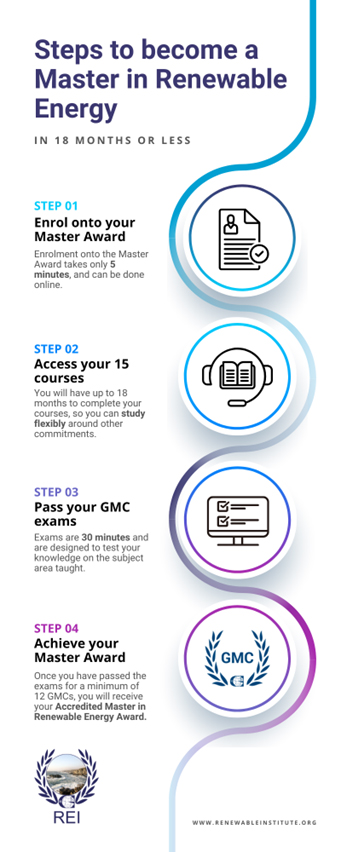
Master in Renewable Energy Award from the Renewable Energy Institute

Join professionals from over 150 different countries worldwide and enrol onto the award-winning Master in Renewable Energy Award from the Renewable Energy Institute.

You will gain access to 15 accredited renewable energy and energy efficiency training courses designed to further your career in the sector.

All courses are accredited by the CPD accreditation service. By studying the Master in Renewable Energy Award, you will accrue a minimum of 280 CPD hours.

For more information, head to https://www.renewableinstitute.org/training/accredited-master-in-renewable-energy-award/ or contact us by phone on +44 0131 446 9479 or by email at training@renewableinstitute.org


This article appeared in the April 2025 issue of Energy Manager magazine. Subscribe here.

Why itโ€™s time to get serious about water

Mike Callis

Mike Callis, Waterscan Ltd

The water market in the UK is at a turning point, and organisations and policymakers are increasingly starting to treat water with the urgency, respect and innovation it needs.

Waterscanโ€™s State of the Water Market 2024 report painted a stark picture around the time Ofwat released its โ€˜final determinationsโ€™ on price increases coming in from April 2025. It revealed a marketplace that is technically open to competition but held back by structural limitations, a worrying lack of data transparency, and a culture that still views water efficiency as a โ€œnice to haveโ€ rather than an operational necessity.

However, it also points to signs of real progress โ€” and an increasingly powerful coalition of voices demanding reform.

The issues are not new, but they are becoming impossible to ignore. Drought risk is rising. Regulatory pressure is tightening. Water costs, once negligible on the balance sheet, are beginning to build up. In addition, the public is increasingly unforgiving of companies and sectors that appear to be wasting or polluting water. The era of cheap, abundant water is over. Organisations that fail to adapt will pay the price โ€” financially, reputationally, and operationally.

Whatโ€™s needed now is not just compliance, but leadership.

A market open in theory, but not in practice

The water market in England was deregulated in 2017, in theory allowing non-household customers to choose their water supplier. But eight years on, the promise of a competitive, customer-driven market has yet to materialise. Switching rates are low, customer satisfaction is stagnant, and many businesses donโ€™t even realise they have a choice.

Waterscanโ€™s research highlights the root causes: a lack of transparency around pricing and performance, limited innovation from suppliers, and a regulatory model that doesnโ€™t do enough to incentivise efficiency or penalise waste. For too long, the market has tolerated mediocre service and rewarded passivity.

But this status quo is no longer acceptable. Water is becoming an increasingly strategic issue, particularly for large, multi-site organisations. It impacts ESG performance, climate resilience, and long-term cost exposure. Organisations want more insight, more flexibility, and more support โ€” and theyโ€™re not getting it from the current market setup.

Data is power โ€” and too few have it

Perhaps the single biggest obstacle to progress is the marketโ€™s data deficit. Accurate, timely consumption data is the foundation of any meaningful water strategy. Yet most businesses still operate in the dark, receiving infrequent, estimated bills and lacking visibility of where, when and how theyโ€™re using water.

This is not just an inconvenience โ€” itโ€™s a major risk. Without robust data, itโ€™s impossible to identify leaks, benchmark performance, or build a credible case for investment. It also undermines trust in the market and prevents meaningful competition.

Encouragingly, some organisations are starting to take matters into their own hands, installing their own data loggers and working with independent experts to build clearer pictures of usage and risk. But this patchwork approach is no substitute for market-wide transparency. Ofwat and MOSL have acknowledged the problem. Now itโ€™s time for coordinated action.

From afterthought to shared priority

One of the most positive trends highlighted in Waterscanโ€™s report is the growing maturity of non-household customers attitudes to water. Efficiency is no longer the preserve of sustainability teams โ€” itโ€™s increasingly being discussed across all levels of the public sector departments and committees.

This shift is being driven by several forces: the sharp rise in other utility prices (making water cost control more attractive by comparison), the expansion of ESG reporting requirements, and a growing awareness of the reputational risks associated with poor water stewardship. In commercial sectors like hospitality, retail and manufacturing, water use is now seen as a core operational issue, not just a compliance box to tick, and the public sector is quickly following.

Forward-thinking organisations are starting to ask smarter questions: How do we set meaningful reduction targets? How do we design out waste in our processes? Can we reuse greywater or harvest rainwater? How do we measure success?

These questions donโ€™t have easy answers. But asking them is the first step to real progress.

The role of independents

Given the limitations of the current market structure, itโ€™s no surprise that many businesses are turning to third parties to help navigate their water strategy. Independent consultants and water managers are increasingly the ones driving innovation, offering services from auditing and procurement to real-time monitoring and demand-side management.

This is a clear signal that organisations are hungry for more than what many licensed suppliers are offering. It also suggests a new kind of market model โ€” one less reliant on traditional retail competition, and more focused on collaborative, consultative partnerships between organisations and experts who can unlock hidden value.

Several local authorities have taken steps already to gain more control over their water usage and costs by becoming self-suppliers. Blackpool Council was one of the early adopters, switching to self-supply to help drive efficiencies and support wider sustainability goals across its public estate. Sefton Council has since made considerable progress on its water journey, using self-supply to identify and address leaks, improve data visibility, and embed water-saving practices into day-to-day operations

Time to make water count

Ultimately, water is not just a resource; itโ€™s a risk, an opportunity, and a responsibility. The 2024 Waterscan report should serve as a wake-up call for everyone involved in the business of water โ€” from regulators and retailers to facilities managers and CFOs.

If we want a water market that works โ€” one thatโ€™s transparent, innovative, efficient, and resilient โ€” we canโ€™t keep doing more of the same. We need bold reform, smarter regulation, better data, and a cultural shift in how we value water.

The good news? The momentum is building. Organisations are ready to lead. Policymakers are starting to listen. And with the right focus, 2024 could be the year the water market starts to live up to its promise.

Keen to learn more and continue the conversation? Join Waterscan at its annual Water Matters conference in London on 19th June 2025 to drive change on water sustainability.

www.waterscan.com


This article appeared in the April 2025 issue of Energy Manager magazine. Subscribe here.

Why are we not using carbon neutral or carbon negative gas to decarbonise industry?

The race to decarbonise our energy demands is becoming increasingly competitive. As companies build their decarbonisation strategies, they become increasingly vaguer as they try to reduce their emissions to Net Zero. Opening the conversation to discuss the myriads of solutions available can address this challenge today. Biomethane and renewable gas being one of those solutions.

Reduce. Replace. Offset. A three-step process that forms the foundation of most energy decarbonisation strategies. But when we analyse our decarbonisation strategies, we only address the โ€œreduceโ€ and some of the โ€œreplaceโ€. Following the guidance on decarbonisation from the Oxford Principles, we should look at all three-steps today.

Replacing fossil-based methane (natural gas) demand is frequently a roadblock in the path to Net Zero. The UK economyโ€™s reliance on gas makes its removal a complex undertaking. This is for a plethora of reasons including the capital costs or inability to make the infrastructure changes to electrify because of the layout of or age of facilities or premises, the effects of using electrified solutions on the final product, requiring further product development, or the inefficiency/lack of suitability of alternative solutions.

Biomethane can solve these challenges and takes businesses to Net Zero. Using biomethane is a versatile solution for any gas user connected to the gas grid. A Gas Purchase Agreement (GPA), like a PPA, enables the shipment of biomethane to any gas user connected to the gas grid, decarbonising their Scope 1 emissions. By mass balancing the biomethane injected and the gas used, it is a simple mechanism to attribute biomethane use to an off taker.

For biomethane production that includes carbon capture and storage, this is a source of net-negative gas, and the GPA with mass balancing is the instrument to attribute those carbon savings to an off taker.

Given the significant value of this gas as a decarbonisation tool, why are we not using more of it?

The answer is with the acceptance of GPAs, both with regulators and in the wider market. This risk can be too high for some to consider this energy and decarbonisation solution. This problem needs to be addressed by the UK government, who can mitigate the risk by acknowledging their acceptance of GPAs, as is the case already in the European Union. Ideally, this would be on the provisions that:

  1. The producer and end user are connected by a continuous pipeline that can trace the movement of the gas
  2. We bundle the commodity, the gas, and the renewable credentialsโ€”green gas certificates and proof of sustainability (POS)โ€”together for transparency and verification.
  3. The biomethane production is free from government subsidy

This would remove the risk of greenwashing and put the UK economy at the global forefront of decarbonisation.

The government will address the acceptance of GPA[SA1]  soon, but businesses need to start the conversation now if they want to get a GPA in place before 2030. This is because once the government makes its intentions clear, a floodgate of interest in biomethane will occur and only those who make the move first will get access to a supply.

For those with Emissions Trading Scheme (ETS) obligations, the allowance trajectory and the scope of businesses with an obligation is set to change as we approach 2050 in line with the UK Governmentโ€™s legal commitment to Net Zero. This will result in fewer allowances available, plus the removal of free allowances in 2026, and increasing demand from newly obligated industries. Thus, the price of allowances will increase and can expose businesses increased financial risk.

Coupling this with increasing market instability from geopolitical conflict, key political changes, and the UKโ€™s increasing dependence on imported gas and elimination of coal will increase the cost of continuing operations as usual.

Therefore, the first movers, with the ambition to future proof their business, will have the competitive advantage.

www.futurebiogas.com


This article appeared in the April 2025 issue of Energy Manager magazine. Subscribe here.

Ecobat Battery shows its mega scale muscle

Ecobat Battery, the UKโ€™s largest battery distributor, has just completed the second phase of a major piece of infrastructure work for a 404 megawatt combined gas turbine power station for the National Grid of Ireland.

The project, which was the second phase of a two stage process, began on the 7th of October and the time critical undertaking had to be carried out and successfully completed within two weeks, while Huntstown power station, operated by Energia, was closed for routine maintenance.

Alongside the pressure of adhering to the non-negotiable timescale that had to be respected, was the scale of the work in question, which was to remove the stationโ€™s previous backup power batteries and install more than two hundred new 2,190Ah batteries, each weighing 160 kilogrammes within a second floor location with restricted, as well as challenging, access, via an outside staircase, than a ladder.

โ€œFollowing a great deal of detailed work to tender for and secure the agreement, this was a largescale job and a significant undertaking, which involved not only the installation of two new banks of batteries, but also the safe removal and correct disposal of the spent batteries,โ€ explained Ecobat Battery Operations Manager, Matt Davies. โ€œIt therefore required complex planning and the close cooperation of third party specialists to complete it successfully and on time.

โ€œAs a major European battery distributor with many years of power storage experience and several brands within our portfolio, identifying the ideal product for the installation was relatively straightforward, as the Sonnenschein A602/2200HB blocs we selected were a perfect solution, so it was the logistics of the project that set us the greatest challenge.

โ€œWith the obvious internal route to the battery room impossible due to health and safety concerns, because it goes over one of the turbines, the second storey external access door was the only option open to us, but to use it, we needed help from our friends at Mastiff Engineering.

โ€œDeploying their fully trained engineers, the Mastiff team supplied, set up and manned a spider crane that would first bring down the spent batteries as we disconnected them from their threads and moved them to the door area, before lifting up the new batteries for us to position and subsequently string together.

โ€œOver the two phases, that means that close to 140 tonnes of batteries were transferred to complete the overall project, so weโ€™re hugely appreciative of the efforts made by the entire Mastiff Engineering team.โ€

For further details, please visit Ecobat Battery at: https://www.ecobatbattery.com/applications/energy-storage-solutions/


This article appeared in the April 2025 issue of Energy Manager magazine. Subscribe here.