
New Research highlights the ‘Balancing Act’ facing the UKโ€™s Rapid/Ultra-rapid EV charging market

A new industry report published by Petalite, a next-generation EV charging company, reveals how the UKโ€™s rapid and ultra-rapid public charging network is entering a new phase – one defined by the need to balance strong commercial performance with the reliable, high-speed experience drivers now expect.

The whitepaper, EV Charging: The Balancing Act, combines in-depth interviews with leading UK rapid/ultra rapid Charge Point Operators (CPOs) and a national survey of 700 EV drivers. It finds a clear tension at the heart of the public charging rollout: drivers want a simpler, faster, and more affordable charging experience but operators need higher utilisation to reach profitability. Achieving both will determine whether the next stage of the UKโ€™s EV transition can be sustained.

Key findings include:

  • Driver frustration remains high: 54% of EV drivers report queuing occasionally or very often for a rapid charger, while 48% occasionally or very often encounter out-of-service units. Affordability is also a persistent pain point, with 40% naming high charging prices as their number one frustration.
  • Speed is king: 68% of drivers prefer to wait for faster charging rather than use a slower charger immediately.
  • Loyalty is earned at the charger: Driversโ€™ loyalty to charging networks is shaped not by brand, but by performance. The top three most important factors for drivers when it comes to their favourite Charge Point Operator are: charging speed (62%), reliability (56%) and ease of use (56%) โ€“ which all directly relate to the networkโ€™s hardware selection.
  • Operational pressures: CPOs report various operational challenges such as site development complexity, regulation, cable theft, system communication and connectivity, as well as hardware failures. Grid connection delays, planning friction, and rising energy costs are also key issues.
  • Optimistic despite headwinds: on average operators have plans to add another 273 new rapid/ultra-rapid charge points each to their networks in the next 12 months.
  • Energy-based utilisation is key to profitability: 63% of CPOs identify energy-based utilisation as their top measure of site performance, and the most important factor for improving site EBITDA and ROI over the next 2-5 years.

Operators are moving beyond the โ€œbuild it and they will comeโ€ phase of expansion, focusing instead on energy-based utilisation, reliability, and profitability. The next chapter of growth will be underpinned by high-quality site selection and next generation charging technology that can overcome grid constraints, as operators prioritise stronger financial performance and a consistent, high-power experience for drivers.

โ€œThis research shows an industry at an inflection point,โ€ says Steven Gardener, CEO of Petalite. โ€œThe UKโ€™s charging rollout is no longer a numbers game. Success will be defined by utilisation, reliability, and the ability to deliver a seamless charging experience. Drivers judge networks by what happens at the charger itself, and every successful session builds trust and loyalty, while every failed one erodes it.โ€

The report also highlights that the UKโ€™s growing diversity of electric vehicles will intensify these challenges. With a wider range of battery sizes and charging capabilities entering the market โ€“ from smaller EVs limited to 50kW to new models capable of 400kW or more โ€“ CPOs must design sites and select hardware that can serve this evolving mix efficiently. So, the ability to flexibly manage power across multiple bays, and seamlessly add more charge points to popular sites will become critical to maintaining driver satisfaction and delivering site performance.

โ€œThe key takeaway from this research is that charging networks are evolving and the high-performing networks in the future will be smarter โ€“ not just larger,โ€ says Steven โ€œUsing next-generation charging technology will be key in delivering charging as quickly as possible to drivers and maximising energy utilisation for operators. By focusing on high quality site selection, reliability and future-proof technology, operators will improve the driver experience, win driver loyalty and strengthen site economics. The networks that succeed will be those that think ahead and build for the vehicles and expectations of tomorrow, not just the demands of today.โ€

The full report, EV Charging: The Balancing Act, is available to download now at https://www.petalite.io/resources/insights/ev-charging-the-balancing-act/

UK rooftop solar installations hit record highย 

The number of certified solar panel installations in 2025 has now surpassed 203,125 โ€“ the previous annual record set in 2011. This brings the total to 1.85 million certified solar panel installations to date, according to data from MCS, the UKโ€™s quality mark for small-scale renewables.

One of the key drivers behind the growth has been installations on new build properties. Since MCS started collecting data for new builds in October 2023, there have been 139,425 certified solar PV installations on properties of this type – accounting for 32% of total solar installations during this period. This proportion has risen to 35% in 2025 and in June earlier this year the record for the highest volume of certified solar going onto new builds in a single month was broken, with 9,507 installations.

The upcoming Future Homes Standard, which will effectively mandate solar panels on new builds by 2027, is set to be published this year. This sets the stage for even further growth in the newbuild solar market.

When it comes to the top performing local authorities for solar installations, Somerset and Cornwall are leading the way, with 3,741 and 3,726 certified installations respectively for the year so far. However, it isnโ€™t just southern regions that are installing solar, with North Yorkshire (2,780) and County Durham (2,668) in third and fourth place. Wiltshire, with 2,545 solar installations, completes the top five for the year to date.

There has also been significant growth in battery storage, often installed alongside solar panels to store excess electricity. By the end of September, certified battery storage installations had increased by 122% compared to the equivalent period last year, with total installations now reaching 59,000.

Ian Rippin, CEO at MCS:

โ€œItโ€™s great to see 2025 continue to be a record-breaking year for small-scale renewables, as more people put their trust in solar to power their homes.

โ€œThis highlights the important role of certification in providing confidence to consumers. Weโ€™ve redeveloped our Installer Scheme to ensure we can continue to support the sector as it grows, putting consumer protection at its heart. Our mission is to give everyone confidence in home-grown energy, especially as the number of installations continues to grow.โ€

Energy Secretary Ed Miliband:

โ€œThe British people are showing record demand for solar panels because they know this is a slam dunk way to cut energy bills.

โ€œThat is why this Government is committed to introducing the Future Homes Standard, so the vast majority of new build homes are fitted with solar from the build and every family who lives in these homes has money off their bills.

โ€œThis is the Governmentโ€™s clean energy superpower mission in action – lower bills and energy security to make working people better off.โ€

Chris Hewett, Chief Executive of trade association Solar Energy UK:

โ€œThis is tremendous news. The longstanding annual record has come close to being beaten for the past two years โ€“ and with the Future Homes Standard coming in, I have no doubt we will see yet more records being set in the coming years. Solar generation is expanding rapidly at all scales, from homes to factories, warehouses and on the ground, helping to drive down bills, secure our energy supplies and deliver economic growth, all while protecting our environment.โ€

MCS holds the most comprehensive repository of data on the uptake of small-scale renewable technologies across the UK on The MCS Data Dashboard. For near-real-time updates on renewable installations, you can sign up for free to The MCS Data Dashboard here.ย 

Carrier Solutions UK Delivers Toshiba Climate Control Refurbishment for Bannatyne Health Club & Spa

Carrier Solutions UK supplied a Toshiba climate control solution for Bannatyne Health Club & Spa in Wellingborough, delivering a complete HVAC refurbishment to improve customer comfort and operational efficiency. Carrier Solutions UK Ltd (formerly Toshiba Carrier UK Ltd) is a part of Carrier Global Corporation (NYSE: CARR), global leader in intelligent climate and energy solutions.

The eight-week project involved decommissioning and removing ageing R407c split systems that had reached the end of their useful lives. These systems were proving costly for Bannatyne Group to maintain, making a modern replacement essential to enhance performance and reduce operating expenses.

Ventec Services Ltd, the appointed installation contractor, selected Toshiba products for their high efficiency, reliability and tailored climate control capabilities. Equipment was procured through one of Carrierโ€™s preferred distributors, Cool Designs Ltd, ensuring a smooth and reliable supply chain throughout the project.

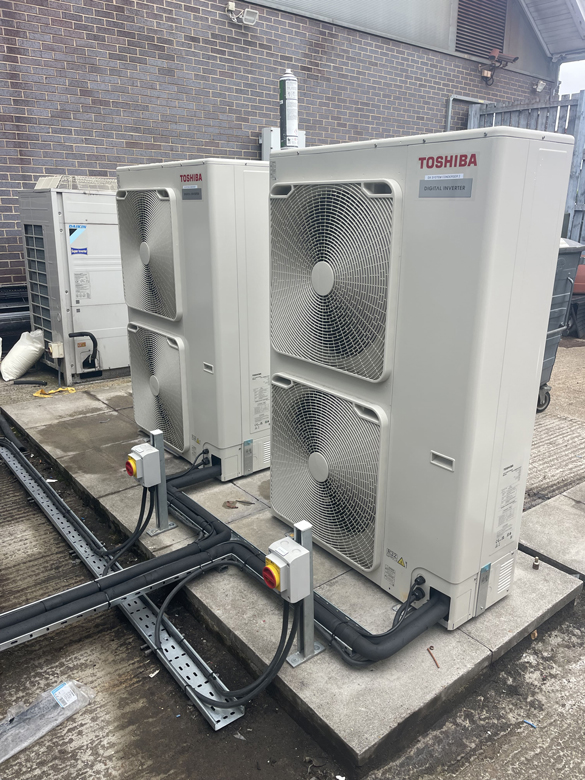
The installed solution included Toshiba Variable Refrigerant Flow (VRF) systems, featuring SMMSu Heat Pump 2-pipe and SHRMe Heat Recovery 3-pipe models, as well as Toshiba Digital Inverter R32 single, twin and triple split units. The project also replaced outdated DX cooling coils and condensing units within the clubโ€™s air handling units.

Key features of the new installation include inverter-driven compressors, which adjust heating and cooling output in response to real-time demand, thereby reducing power consumption during periods of low usage. A Toshiba Black Pear Central Controller was also installed, allowing the clubโ€™s General Manager to control different temperature settings across the gym, studios, spa areas and offices from within the main office.

Careful planning ensured the project was completed outside opening hours, thereby minimising disruption to daily operations.

โ€œWorking with Ventec and Carrier Solutions UK ensured a hassle-free installation,โ€ said Stuart Maclachlan, Regional Manager at Bannatyne Group. โ€œThe Toshiba system has improved comfort and both members and staff have noticed the difference.โ€

Richard Goose, Director of Ventec Services Ltd, added: โ€œThe collaboration between Ventec, Bannatyne and Carrier Solutions UK made this project a great success. Toshibaโ€™s systems were the ideal choice for their efficiency and flexibility and weโ€™re proud to have delivered a solution that exceeds client expectations.โ€

For more information on Toshiba products, visit: https://www.toshiba-aircon.co.uk

Local Voices, Local Plans: How Energy Planning Can Unlock Network Investment

Andrew Clark

Andy Clark, Business Leader โ€“ Place, Energy Systems Catapult

Across the UK, the drive to decarbonise and establish a more secure energy system is colliding with one of the most persistent challenges in the energy system โ€“ network constraints. As demand grows from new homes, electric vehicles, heat pumps and data centres our local electricity networks are struggling to keep up. Projects stall, connection queues lengthen, and investment is delayed.

Itโ€™s a familiar story for many energy managers: thereโ€™s the will, the technology, and often the funding โ€“ but not always the capacity. Whatโ€™s missing is a clear, a locally grounded view of what is needed, where itโ€™s needed, and when it will happen to influence regulatory investment. Thatโ€™s where Local Area Energy Planning (LAEP) is beginning to make a real difference.

Network constraints: a blocker to local energy investment

The scale of the challenge is stark. Many Distribution Network Operators (DNOs) report record connection requests โ€“ from solar farms, industrial sites, housing developers and energy-hungry data centres. Yet without visibility of local authority development plans or community ambitions, network investment has often been reactive, not proactive.

This disconnect slows the energy transition and threatens local growth. If the grid canโ€™t expand in step with predictable local need, opportunities for jobs, housing, investment and innovation risk being lost or significantly delayed.

How LAEPs change the picture

Energy Systems Catapult has been at the forefront of developing and delivering Local Area Energy Plans โ€“ detailed, spatial, data and stakeholder-driven blueprints that help local areas understand their pathways to net zero and the potential impact on the energy networks. Crucially, as well as providing insight for delivery stakeholders and to target investment, LAEPs bridge the information gap between local plans and network planning.

Informed by scenario analysis to identify low-regret projects across a local area, LAEPs help stakeholders target and buy-into delivery plans, meaning network operators can have greater confidence in whatโ€™s coming โ€“ where EV uptake will surge, where solar deployment is viable, where electrified heating will add load. They can then compare this bottom-up insight to their Distribution Future Energy Scenarios (DFES) and long-term investment plans, allowing networks to target upgrades ahead of need.

In short, LAEPs improve forecasting, sharpen investment decisions and reduce risk.

Weโ€™re already seeing this play out across the UK. Dozens of councils have completed or commissioned LAEPs, and many more are using them to support local planning, funding bids, and engagement with their DNOs. Where they exist, investment conversations become more productive. Network planners can test assumptions with solid local data; local authorities can evidence why upgrades are needed.

From local plans to regional strategy

This local insight can now also add value through the new Regional Energy Strategic Plan (RESPs) process, led by the National Energy System Operator (NESO). RESP brings together data from local authorities, network operators and regional stakeholders to produce a shared picture of energy needs across each region.

Through the Ready for RESP 2025 programme, Energy Systems Catapult is helping local authorities feed their LAEP data into this regional process. The aim is a consistent, transparent basis for future network investment โ€“ one that aligns with local priorities, supports housing and industrial growth, and maximises use of local opportunities such as for renewable energy deployment.

If LAEPs and RESPs work hand-in-hand, we get a virtuous circle: local plans inform regional forecasts, which shape network investment. Thatโ€™s how we move from a reactive to a strategic system.

Unlocking growth across housing, solar and data centres

The impact of better alignment between energy planning and infrastructure investment is far-reaching.

  • Housing: Developers need confidence that network capacity will be available where new homes are planned. With LAEPs identifying future demand hotspots, DNOs can invest earlier, enabling housing growth to proceed on schedule and supporting integrated low-carbon heating and EV charging infrastructure.
  • Solar and renewables: Local spatial mapping helps identify where solar generation can be deployed efficiently โ€“ avoiding constrained areas and making best use of existing headroom. This reduces curtailment, unlocks viable projects and makes planning more predictable.
  • Data centres and high-demand users: These are essential for the digital economy but require guaranteed power and grid resilience. LAEPs and RESP data can show where capacity exists or where investment will unlock strategic locations โ€“ making regions more attractive for high-tech investment.
  • Regional priorities: Ultimately, energy planning done well supports the wider growth agenda โ€“ targeting investment in regions that need it most, stimulating local jobs and supply chains, and building more resilient, inclusive economies.

Delivering ahead of need

To make this work at scale, a few shifts are essential. Local authorities need resourcing and skills to produce high-quality LAEPs. Data sharing between councils, network operators, regional planners and the RESP must be effective and standardised. And regulators must give networks the confidence to invest ahead of demand when robust local evidence shows it will be needed.

Because the cost of waiting โ€“ stalled connections, lost growth, and missed decarbonisation targets โ€“ is far greater.

A local-first energy transition

The UKโ€™s energy transition will be won or lost at local level. The combination of Local Area Energy Plans and Regional Energy Strategic Plans offers a once-in-a-generation opportunity to rewire how we plan and invest in infrastructure.

By aligning network investment with real local needs, we can unlock faster deployment of clean technologies, accelerate housing delivery, and attract new industries.

Local voices, local data, and local plans are not just inputs to the energy transition โ€“ they are the key to making it deliverable.

Want to find out more? Visit our interactive LAEP map to see if your area has a plan and how it relates to the assets you manage: https://es.catapult.org.uk/tools-and-labs/local-area-energy-plans/


This article appeared in the Nov/Dec 2025 issue of Energy Manager magazine. Subscribe here.

Non-commodity costs: will businesses pay the price for clean power?

Stephen Evans

Stephen Evans, Industry Costing Manager on the Optimisation Desk, nBS

The UKโ€™s energy market is undergoing rapid change as clean power moves from ambition to reality. While businesses have become accustomed to understanding and managing the volatility of commodity prices, rising non-commodity charges now represent a more pressing challenge.

Delivering the scale of renewables to meet the UKโ€™s clean power targets means building significant new infrastructure to connect and transport power. Around 5,500 kilometres (km) of new grid capacity is needed in the next five years, more than double what has been built in the past decade.

However, this transformation comes at a cost. Every business in the UK is now facing a sharp increase in non-commodity costs, which will help fund the infrastructure needed.

Given this context, it is perhaps not surprising that energy remains the top risk businesses are facing for the fourth year running, according to our Business Energy Tracker 2025, which draws on data from over 130 large energy users.

The report revealed that 79% of businesses predict their energy costs will rise over the next 12 months and more than half (54%) say they are having a negative impact on business confidence.

In addition, 97% of businesses surveyed said they are worried about the financial impact of the low-carbon transition, while half believe that non-commodity costs are unfair.

That said, while many respondents noted that standing charges have increased across their portfolios over the past year, there was support for the clean power mission. Many understood the benefits it would bring, and more than half (57%) also understood that they will need to bear some of the costs for the low-carbon transition.

So, where are these increases coming from?

Three charges in particular are likely to be impacted:

  • Contracts for Difference (CfD) provide renewable generation developerswith a guaranteed price for power, ensuring new projects are financially viable. It is central to delivering Clean Power 2030, but comes at a cost. CfD charges could rise from around ยฃ10/megawatt hour (MWh) today to nearly ยฃ30/MWh by 2030
  • Transmission costs will also rise. With the network needing to grow four times faster than in the last decade, operators expect their investment to double. For businesses, that means annual charges could also double. A customer in the lowest high voltage band, for instance, could see costs increase from ยฃ8,000 in 2025/26 to ยฃ25,000 by 2030/31
  • Balancing costs are also likely to increase. These cover the cost of ensuring supply meets demand and are already heavily influenced by constraint costs, the payments to generators who cannot sell their output because the grid cannot accommodate it. Unless the grid expands in step with renewables, balancing costs could rise from ยฃ12/MWh now to around ยฃ20/MWh by 2030

Managing the non-commodity risk

While organisations cannot control policy or infrastructure costs, they can take steps to reduce their exposure. The Business Energy Tracker revealed that energy efficiency remains the top priority for managing risk, with 71% of respondents focusing on it as their primary strategy. For larger businesses with an annual energy spend of over ยฃ1 million, investing in on-site generation was another key measure, with 40% looking to make this investment.

Other measures included using energy management tools (40%), shifting energy demand to off-peak times (40%), switching to renewable energy (34%) and appointing an in-house energy specialist (32%).

For us, there are four ways that businesses can limit the impact of rising non-commodity costs:

  1. Reduce your energy consumption: while itโ€™s difficult to control your non-commodity costs, you can control your energy consumption. Investing in energy efficiency and other energy reduction measures can have a positive impact on the amount you pay for energy.
  • Consider on-site generation: any energy installed behind-the-meter (BtM) is not subject to industry costs such as Balancing Services Use of System (BSUoS), CfD or Capacity Market (CM) charges.
  • Reduce your network capacity: if you are able to do this, then you can reduce your Distribution Use of System (DUoS) and Transmission Network Use of System (TNUoS) charges.
  • Load management: this can be an effective way to reduce peak CM costs.

Building a clean power system that works for all

The transition to clean power is an absolute necessity. However, the Business Energy Tracker shows that the concerns about the short-term cost of the delivery and the impact this could have on confidence and competitiveness, are very real and need to be addressed.

Weโ€™re ready to work with the government to ensure that, while we build a cleaner and more stable energy system, businesses receive the right support to ensure they remain competitive now and in the future.

Business Energy Tracker 2025 – The cost of clean power: will your business pay the price? is available to download now. You can also use nBSโ€™s Energy Cost Calculator to understand how non-commodity costs could affect your energy invoice.


This article appeared in the Nov/Dec 2025 issue of Energy Manager magazine. Subscribe here.

Powering the UKโ€™s Net-Zero Future: Energy Technology Live 2026

As the UK races toward its net-zero targets and seeks to strengthen energy security, one event is fast becoming the heartbeat of the transition. Energy Technology Live 2026, taking place 11โ€“12 March 2026 at Birminghamโ€™s NEC, will once again bring together the most forward-thinking minds in energy, manufacturing, infrastructure, and materials to accelerate the UKโ€™s net-zero targets and energy security ambitions.

Featuring Two Shows in One

One of the eventโ€™s key strengths lies in its co-located format.

The Distributed Energy Show offers a platform for energy users, from local authorities and industrial operators to developers and landowners the chance to explore the technologies and services needed to implement flexible, future-ready energy strategies.

The Energy Storage Show will spotlight advances in battery and energy storage systems for everything from utility-scale projects to on-site SMEโ€™s and domestic applications.

A Platform for the Future of UK Energy

Energy Technology Live has become synonymous with innovation and collaboration across the energy sector. The 2026 edition promises to be no exception, offering a vital forum for stakeholders across the UKโ€™s energy ecosystem to explore the next wave of technologies and sustainable solutions, from grid-scale renewables and industrial decarbonisation to battery storage, hydrogen, and AI-enabled systems.

As the industry navigates increasing pressure to decarbonise, shifting markets, and evolving policy landscapes, it is essential that all corners of the sector come together at Energy Technology Live, armed with the knowledge and connections needed to keep pace with change.

โ€œWe canโ€™t wait to bring together the leading innovators and disruptors in distributed, flexible energy and energy storage once again. Itโ€™s your chance to see the very latest technologies up close, while meeting the entire energy value chain -from users, network operators and energy generators to technology suppliers, project developers and sustainability leaders. For two action-packed days, this event brings the energy sector together like nowhere else, with unbeatable opportunities to network, trade and share ideas.โ€ – Marina Rodousaki, Exhibition Director, Energy Technology Live

With registration granting access to both shows, attendees can explore the full spectrum of solutions shaping the distributed, decentralised energy landscape.

A Conference Programme Powering the Future

At the heart of Energy Technology Live is a three-stage conference programme featuring some of the brightest minds in energy strategy and innovation. The 2026 speaker line-up includes experts from Elexon, Modo Energy, Octopus Energy, SP Energy Networks, Zenobe, Centrica, UK Power Networks, Fike, Form Energy, and Roadnight Taylor, with many more to be announced.

Across three stages, attendees can expect keynote sessions, lively panel debates, and practical case studies, all designed to turn bold ideas into actionable strategies.

โ€œWe know that if weโ€™re going to address the challenge of climate change, we need an all-systems approach.โ€ Says Luke Strickland, Net Zero Advisory Lead (Buildings and Cities), Mott MacDonald. โ€œThis event is so great at bringing people together at all scales to explore how we can do things differentlyโ€”because business as usual doesnโ€™t get us to net-zero, and I think thatโ€™s really exciting.โ€

Key themes for 2026 include Flexibility, Next-Generation Storage, Hydrogen, Heat Networks, Solar, Thermal Energy, and Data-Driven Energy Systems, all hot topics for an industry in transition.

Innovation on Display

Alongside the conference, the exhibit will feature 200+ companies, showcasing products, technologies, and services that support the transition to cleaner, more efficient energy systems. Expect to see key companies such as 2G Energy, Benning Power Electronics, Caldera, Clarke Energy, DSO โ€“ Electricity North West, Energy2, Fike, Flexitricity, Greener Power Solutions, NESO Power Responsive, SunSynk, and Waxman Energy, with many more to be announced.

โ€œEnergy Technology Live is an incredible showcase for emerging technologies. Says Mark Meyrick, General Manager, Ecotricity Smart Grid โ€œWe saw innovations we hadnโ€™t come across before, and being able to speak directly with the people behind them made it more impactful than watching a clip online. I love it for that.โ€

Connecting the Energy Community

Networking has always been a defining feature of Energy Technology Live. Attendees will have the opportunity to connect with peers, suppliers, policymakers and potential partners across the energy ecosystem. From informal meetups to networking receptions the event is designed to spark meaningful connections and long-term collaborations.

Whether youโ€™re a policymaker shaping the future of energy, a manufacturer looking to decarbonise operations, or a technology provider ready to scale, Energy Technology Live 2026 offers a rare opportunity to connect, collaborate, and contribute to the UKโ€™s energy transition.

Energy Technology Live 2026 takes place 11โ€“12 March at the NEC, Birmingham. Register for your free pass and gain access to professionals across energy, technology, R&D, industry, and policy sectors at https://energytechlive.com/registration/


This article appeared in the Nov/Dec 2025 issue of Energy Manager magazine. Subscribe here.

Reducing embodied carbon in ventilation systems: A critical step toward net zero

Alun Thomas, Nuaire Engineering Director

As the built environment accelerates its transition toward net zero, the industryโ€™s attention has rightly shifted from just operational efficiency to whole-life carbon emissions. While energy efficiency remains crucial, reducing embodied carbonโ€”the emissions associated with the production, transportation, installation, and disposal of building materialsโ€”has become an urgent priority. Among these materials, mechanical, electrical, and plumbing (MEP) systems are estimated to account for around 23% of a buildingโ€™s embodied carbon. As developers, specifiers, and manufacturers align with Science-Based Targets and upcoming regulations, the HVAC industry faces a clear mandate: reduce embodied carbon without compromising performance, reliability, or indoor air quality.

Embodied Carbon: The Overlooked Culprit

Traditionally, much of the building industryโ€™s focus has been on operational carbonโ€”the emissions generated during the use phase of buildings. However, embodied carbon can account for 20-50% of the total lifecycle emissions of a building, depending on usage type and design. As operational carbon is reduced through improvements in building efficiency and renewable energy adoption, the relative impact of embodied emissions becomes even more significant.

For ventilation systems, this challenge is particularly nuanced. These products are essential for indoor air quality, thermal comfort, and regulatory compliance. Their complexity, the materials used (primarily steel and plastics), and the necessity for durability make decarbonisation more difficultโ€”but not impossible.

The Role of Material Innovation

Reducing embodied carbon in HVAC systems begins with material choices. Steel, a staple material in commercial ventilation units, is a major contributor to embodied carbon due to the energy-intensive processes involved in its production. Similarly, plastics used in residential systems and ducting often rely on virgin fossil-based polymers.

Progress is being made. One promising development is the transition to low carbon-emissions steel made using recycled content and renewable energy sources. Recycled and renewably produced steel, such as XCarbยฎ from ArcelorMittal, dramatically lowers the carbon footprint of HVAC components. For context, this steel has an embodied carbon footprint of just 0.898 tCOโ‚‚e per tonne, compared to 2.51 tCOโ‚‚e for conventional steel. 

Nuaire is the first UK ventilation manufacturer to switch to this innovative steel across several high-volume commercial products, including our BPS air handling units and XBOXER XBC packaged heat recovery systems. This shift will result in a 64% reduction on the steel proportion of our SCOPE 3 embodied carbon activity within the first year alone, compared with the same steel manufactured via the conventional steelmaking route.

Plastics present another opportunity for carbon savings. The casing material in our Drimaster-Eco Positive Input Ventilation (PIV) units was recently switched from virgin ABS plastic to 100% recycled plastic, reducing carbon by 167 tonnes each year. The only noticeable change for customers is a shift in the productโ€™s external colourโ€”from blue to blackโ€”highlighting that sustainable change neednโ€™t sacrifice function or form.  We have also changed to recycled plastic for our ducting, and implemented careful material reduction and other material substitution, which removed 2,000 tons of carbon from our product portfolio in 2024 alone.

Measurement, Transparency, and Accountability

Reducing embodied carbon is not only about making better material choices – it also requires transparency and standardisation in measurement. Without consistent, verifiable data, designers and clients struggle to assess and compare options across product categories.

To support this need, manufacturers need provide CIBSE TM65-compliant embodied carbon assessments, which estimate the emissions associated with HVAC products from raw material extraction to end-of-life. These datasheets allow specifiers to make informed decisions, balancing carbon performance with cost, efficiency, and compliance requirements.

Nuaire, as part of our broader carbon strategy, now provides TM65 datasheets for the majority of our product range. This helps consultants and developers incorporate embodied carbon metrics into Building Information Modelling (BIM) and lifecycle assessments, offering clarity and comparability that have long been missing from HVAC procurement decisions.

Scaling Impact Through Collaboration

Transformative change doesnโ€™t happen in isolation. The HVAC sectorโ€™s decarbonisation journey will require deep collaboration across the supply chain. Nuaireโ€™s partnership with Steelco, a UK steel supplier, and ArcelorMittal is a case in point. These long-term relationships enabled the early adoption of XCarbยฎ steel and demonstrate how joint innovation between manufacturers and material suppliers can fast-track progress.

It also reflects a growing understanding that supply chain emissions (Scope 3) are where many companies must now concentrate their efforts. By working closely with suppliers to validate Environmental Product Declarations (EPDs), manufacturers can help drive broader systemic change across the industry.

From Leadership to Industry Standard

As regulatory pressure growsโ€”such as potential embodied carbon caps and whole-life carbon assessments becoming mandatory in future UK building regulationsโ€”early adopters will set the standard for the rest of the market.

However, beyond compliance, there is a broader imperative. The climate crisis demands more than incremental change. By tackling embodied carbon in ventilation systems, the HVAC sector has a real opportunity to lead by exampleโ€”delivering healthier buildings that donโ€™t cost the earth.

Conclusion: A New Carbon Paradigm

The road to net zero is not a straight one, and it certainly doesnโ€™t end with energy efficiency alone. Reducing embodied carbon in ventilation systems is both a technical and ethical challengeโ€”one that calls for innovation, transparency, and industry-wide commitment.

Material innovation, such as the adoption of low-carbon steel and recycled plastics, is a crucial first step. So too is the development of measurement frameworks like TM65, which allow decision-makers to prioritise carbon performance alongside traditional criteria.

As more manufacturers more toward low-carbon products, and as demand from developers, architects, and occupants continues to grow, the ventilation systems of tomorrow will be defined not only by how efficiently they move airโ€”but by how responsibly they are made.

Nuaire has been delivering clean air solutions for over 50 years, setting industry standards in residential, commercial and industrial ventilation systems.  For more information go to www.nuaire.co.uk


This article appeared in the Nov/Dec 2025 issue of Energy Manager magazine. Subscribe here.

Does energy efficiency hold the key to meeting EU energy & climate goals?

Mark Doyle

Mark Doyle, Senior Account Manager, Key Account Management at SEFE Energy

In recent months, the European Commission (EC) has put energy efficiency front and centre in what it describes as a โ€œnew impetusโ€ for reaching EU energy and climate goals.

The focus of the ECโ€™s dedicated campaign was unpacked at the IEA Global Energy Efficiency Conference in Brussels on the13 June 2025 where the Commissioner for Energy and Housing, Dan Jรธrgensen, pledged a renewed commitment towards energy efficiency.

The central premise was articulated as such: โ€œto fight climate change, to provide our people with affordable clean energy, for our own security, energy efficiency needs to be at the core of everything we doโ€.

Among the list of ten energy efficiency areas and a number of specific deliverables โ€“ including an Efficiency Action Forum with EU countries and a guarantee scheme for SMEs โ€“ was the need, quite simply to increase energy efficiency awareness among businesses and communities.

How key could energy efficiency awareness be in supporting a Europe-wide clean energy transition and helping to protect businesses from the impacts of price and supply volatility? Letโ€™s explore.  

The case for energy efficiency

I should firstly note that the conference also saw the launch of a new paper from the International Energy Agency (IAE), โ€œGaining an edge โ€“ the role of energy efficiency in industrial competitivenessโ€. The reportโ€™s findings provide a good basis for exploring common obstacles to energy efficiency and where organisations are seeing value.

The paper notes that while industrial energy demand has seen significant growth in recent years, driven by China and India, progress in industrial energy efficiency has slowed and stagnated.

The prize for those that do succeed in boosting their energy efficiency can be significant โ€“ the IAE calculates that for EU firms with high energy costs and thin profit margins, that a 10% energy saving is equivalent to the profit from a 4-16% increase in sales.

The report also noted a connection between energy efficiency investments and labour productivity or job satisfaction. A link between these investments and improved indoor environments โ€“ better lighting, air quality and thermal comfort are often tied to enhanced worker satisfaction and attendance.

Key obstacles to energy efficiency

From the IAEโ€™s surveying of 1,000 industrial firms across 14 countries it found that, unsurprisingly, upfront cost barriers were identified by companies as the main obstacle to implementing energy efficiency improvements. This was followed by information barriers (lack of data to make the business case or understanding on available options) and skills shortages in key energy efficiency occupations.

The data point is key one โ€“ to put it plainly, accurate data is absolutely essential. In order to measure energy efficiency improvements, we need precise data to track energy consumption accurately. By analysing historical data, we can identify inefficiencies, pinpoint areas for improvement, and predict future energy needs โ€“ a key part of becoming more energy efficient.

Linked to this is the value of audits for helping us understand trends and patterns in energy use. Less than a third of the surveyed companies had carried out an energy audit in the past five years and for companies with fewer than 100 employees, only 15% had carried out an energy audit in the last five years.

The value of quick-wins

While the report goes on to articulate the bigger scale policy asks to best support industry in reducing energy usage, it also hones in on the โ€œquick-winโ€ measures that can help to deliver savings โ€“ everything from power management of equipment and installation of LED lighting systems and encouraging behavioural changes.

It may sound simple, but educating teams about smarter energy management is one of the most effective ways to set in place the core foundations needed to help reach net zero.

At SEFE Energy, weโ€™ve seen firsthand the benefits of this culture change and education piece for staff. An employee-led energy strategy is always going to reap stronger results โ€“ when this is aligned with a wider sustainability programme and goal, itโ€™s more likely to galvanise employees.

The case for energy efficiency

As underscored by the European Commission and the findings of the IAE, energy efficiency offers far-reaching benefits, from reducing costs to improving working conditions and driving industrial competitiveness. Even modest efficiency gains can yield significant financial returns and greater resilience against market volatility.

While the ECโ€™s full vision will only be realised with the support and collaboration of Governments and policymakers, energy efficiency is one of the most effective tools we have now to work towards net zero goals and this can begin quite simply with awareness, auditing and action.

www.sefe-energy.co.uk


This article appeared in the Nov/Dec 2025 issue of Energy Manager magazine. Subscribe here.

Hypervoltย launch Ultra Mode rewarding drivers for smart charging, powered by EDFโ€™sย PowerShift

EDF has partnered with Hypervolt to launch Ultra Mode, a new smart charging feature that rewards electric vehicle (EV) drivers for supporting the grid.

Enabled by EDFโ€™s status as a Virtual Trading Party (VTP), Ultra Mode allows eligible drivers to earn monthly cash rewards by charging their vehicles at optimal times, even if EDF is not their supplier. EDF PowerShift automatically schedules charging when electricity is cheaper, while ensuring mobility needs are met. By opting in, drivers receive monthly payments. EDF trades the aggregated flexibility in wholesale and local markets to support a more stable, efficient and low-carbon system.

For example, 10,000 EVs connected to PowerShift can provide 10 megawatts of flexible power โ€” enough to match the electricity demand of over 32,000 average UK homes at any moment. By expanding its flexibility services to all enabled behind-the-meter assets, EDF is helping accelerate progress towards the UKโ€™s target of 12 GW of consumer-led flexibility by 2030.

Stuart Fenner, Wholesale Market Services Commercial Director at EDF, commented: โ€œSmart home EV charging helps make the grid cleaner, more flexible, and more cost effective. With Hypervoltโ€™s UltraMode integrated with our PowerShift platform, EV owners can get rewarded for activity supporting the grid.โ€

Flavian Alexandru, Founder and CEO of Hypervolt, added: โ€œUltra Mode is a Hypervolt innovation designed to put drivers at the heart of the energy transition. Weโ€™re delighted to launch with EDF PowerShift, making smart charging simple, rewarding and effortless.โ€

Building a greener NHS: how decarbonisation and smart hospitals can transform healthcare estates

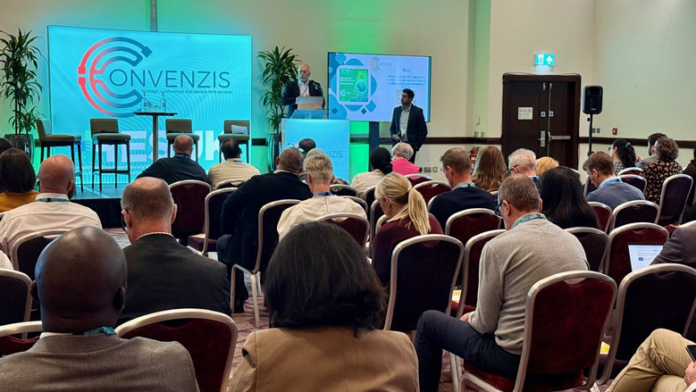
At the Convenzis NHS Sustainable Solutions Conference, Equans Regional Director for Healthcare, Simon Hayman, highlighted the pressing challenge facing NHS Trusts: how to decarbonise, adapt to climate change and improve the air quality for its communities, while managing ageing estates, complex PFI agreements, and limited budgets.

The NHS is leading the way with regards to its carbon emissions targets, but the message is clear โ€“ decarbonisation is no longer optional. It is essential to building resilient, affordable, and sustainable healthcare estates that can support patient needs now and in the future.

A proven five-stage roadmap

Equans have developed a tried and tested five-stage decarbonisation roadmap that gives NHS Trusts a practical framework for action. It begins with data โ€“ understanding where emissions come from and how buildings are used. This data-driven approach enables smarter decision-making and highlights opportunities for immediate behaviour change, such as temperature management and building management system optimisation.

The roadmap then focuses on understanding contracts, engaging stakeholders, and prioritising interventions before moving into detailed, costed plans developed by the Carbon Shift team. These are broken down into โ€˜off-the-shelfโ€™ packages that can be quickly tailored for funding bids or contract variations. In a landscape where funding timelines are tight, this readiness is a real advantage.

Turning strategy into reality: case studies

Simon showcased real-world examples of how this roadmap is already helping Trusts decarbonise.

  • All-electric hospitals: the UKโ€™s first fully electric healthcare estate, Oriel eye hospital in London (opening 2027) and all-electric stand-alone diagnostic centre at West Middlesex University Hospital (2028) are being delivered by Bouygues UK, and Equans are delivering a full retrofit of Pontefract hospital PFI building (from 2028). These projects combine electrification of heating and hot water with thermal storage, solar power, and battery energy storage to create resilient, low-carbon estates enhancing the air quality for the patients and communities.
  • District heating networks: In North West London, with PSDS funding withdrawn, Equans is working with its client on a PFI Hospital to access the Green Heat Network Fund (GHNF). By combining GHNF support with match funding, Trusts are able to proceed with low-carbon heat solutions despite a challenging funding environment.
  • Smart hospitals: In Canada, Equans have already delivered 12 smart hospitals through Plan Group. In the UK, Oriel will become the first of its kind.

Overcoming funding barriers

One of the greatest challenges for Trusts remains access to capital funding. The closure of the Public Sector Decarbonisation Scheme (PSDS) has created gaps in financing. When opportunities do arise, the window for applying is often tight, meaning Trusts must be ready to act quickly.

Equans’ decarbonisation offer is designed to meet this need. By preparing detailed business cases in advance, Trusts can move at pace when funding becomes available. Simon stressed the importance of early engagement with DHSC, so that bids are viewed favourably before they even land.

Adapting existing PFI contracts also creates opportunities. By integrating decarbonisation into lifecycle and asset management, Trusts can unlock long-term value and resilience without waiting for grant funding.

Beyond carbon: air quality and transport

Decarbonisation is not just about reducing emissions โ€“ itโ€™s also about creating healthier environments for patients and staff. The Royal College of Physicians has been clear, there is no safe level of air pollution, and action is urgently needed.

Equans are tackling this on multiple fronts. Alongside electrification of estates, they are investing in sustainable transport solutions, from EVs to e-cargo bikes. With more than 1,400 vehicles now fully electric, and hospitals like Oriel set to be powered 100% by electricity, the link between decarbonisation and improved air quality is becoming stronger every day.

The promise of smart hospitals

A key theme of Simonโ€™s session was the emergence of smart hospitals. These are not simply โ€˜smart buildingsโ€™ โ€“ they are connected, adaptive environments that put patient care at the centre of design.

Smart hospitals use technology to improve patient flow, space utilisation, and staff responsiveness. They allow Trusts to measure and improve KPIs such as patient satisfaction, waiting times, and staff productivity. Crucially, they also deliver measurable carbon savings and energy efficiencies.

Equans supports Trusts beyond the construction phase with a โ€˜soft landingโ€™ approach, ensuring NHS teams are ready to use digital systems effectively. By aligning KPIs for both patient care and sustainability, smart hospitals represent a genuine step-change for the NHS.

Building climate resilience in healthcare estates

The journey to net zero in healthcare will not be easy. But with proven roadmaps, smart funding strategies, and digital innovation, it is possible to deliver estates that are efficient, resilient, and patient-focused.

Equans are committed to supporting NHS Trusts every step of the way, from data collection and behavioural change through to electrification, smart hospital delivery, and sustainable transport.

As Simon concluded, the NHS has an opportunity to lead the way in building climate resilience across the public sector. With the right partnerships and a commitment to innovation, a greener, healthier NHS is within reach. www.equans.co.uk


This article appeared in the Nov/Dec 2025 issue of Energy Manager magazine. Subscribe here.