How UK schools will turn net zero ambitions into action in 2026ย 

Hannah Gains

Hannah Gains, national education manager at Net Zero Buildings.

New government policy, updated frameworks and standards and green funding initiatives are increasing pressure on UK schools to decarbonise in 2026. By adopting a mix of behavioural changes, targeted retrofitting, sustainable rebuilding and modern construction methods, estate managers can reduce emissions and take significant steps towards meeting net zero ambitions.

In its Climate and Sustainability Strategy, the Department for Education (DfE) laid out a multi-pronged approach to ensure that the education sector could tackle climate change. A key requirement was for all schools to have a Climate Action Plan in place by September 2025, setting out how emissions will be reduced and energy efficiency improved. Schools are also expected to appoint a sustainability lead to drive delivery, monitor and report progress. While this requirement only came into force recently, its full impact will be felt throughout 2026 as schools actively reduce carbon emissions and embed sustainability further into operations.

The government also released its School Estate Management Standards earlier this year, a framework for how schools should run their sites. It explicitly incorporates sustainability expectations and to achieve the highest rankings, schools must have a robust plan in place to decarbonise. In 2026, improving energy performance and reducing carbon emissions will no longer be optional considerations, but central measures of estate management effectiveness.

Alongside policy and standards, targeted funding initiatives are accelerating green activity. Several programmes announced in 2025 will impact school operations in the coming months, including Great British Energy supporting solar installations at 255 school sites. The Greener Schools pilot programme was also recently launched, offering up to ยฃ500,000 per school to trial net zero interventions. While the scheme is currently regional, there is potential for similar approaches to be rolled out nationally. With estimates suggesting that there is currently a ยฃ16.3 billion investment gap to decarbonise the UKโ€™s 32,149 schools, further initiatives and funding are likely to be announced in the coming weeks and months, which will impact sustainability initiatives. 

Schools are also beginning to feel increased pressure to deliver on net zero promises from students and parents as sustainability becomes more embedded in their everyday attitudes and behaviours, in fact, nearly four in five primary-aged children (78 per cent) confirmed they were worried about climate change. 

So, how can schools achieve decarbonisation goals in practice? 

On average, around 50 per cent of a schoolโ€™s electricity is consumed outside of operational hours. Consequently, reducing unnecessary energy use is the quickest, and simplest step schools can take towards achieving net zero. Practices such as training staff and pupils to switch off lights and equipment when classrooms are not in use, (lighting, computers, whiteboards, etc), may seem insignificant, but can cumulatively generate significant savings. Schools should also review standby settings with ICT teams and consider replacing older servers with more efficient models. 

Behavioural changes can deliver immediate reductions in energy use, but schools will also require physical infrastructure upgrades to achieve further efficiency improvements. Retrofitting is used in the education sector to make existing buildings more energy efficient and in line with modern standards without the high capital costs of full replacement. Common interventions include upgrading insulation, improving lighting and installing more efficient heating. 

However, retrofitting alone cannot resolve every challenge, as its effectiveness is often constrained by structural limitations such as hazardous materials like RAAC (Reinforced Autoclaved Aerated Concrete), and outdated building layouts, which can restrict how much energy and carbon reduction can be achieved. As a result, sustainable rebuilding will become increasingly essential in 2026, especially as the government has expanded the School Rebuilding Programme, which will see hundreds of ageing and high-risk school buildings replaced, alongside its commitment to remove RAAC from all schools and colleges.  

Any school rebuilding projects must support wider sustainability and net zero goals. The building and construction sector has historically generated a significant amount of greenhouse gas, accounting for approximately 37 per cent of global emissions. To limit the environmental impact of new buildings, estate managers must utilise Modern Methods of Construction (MMC) to lower emissions. For example, modular construction enables school buildings to be manufactured offsite in controlled factory environments, where lean manufacturing processes ensure components are produced to exact specifications, resulting in zero waste. By shifting construction activity from the site to the factory floor, modular solutions also address other sustainability challenges, including excessive vehicle movements and congestion. This will be increasingly vital in 2026, as improving air quality increasingly emerges as a critical priority due to numerous high-profile studies highlighting the harmful impact traffic-related air pollution (TRAP) can have on childrenโ€™s neurodevelopment and cognitive functioning.

Sustainable construction is fundamentally about maximising material reuse and minimising waste. Modular buildings are a powerful tool for schools seeking to reduce their long-term environmental impact in this area, as they are designed to withstand the test of time through high quality design and manufacturing standards. Modular solutions are also inherent flexibility, for example, structures can be repurposed, relocated, and reconfigured as needs evolve, supporting a circular economy. Repurposing buildings can generate between 50 and 70 per cent fewer carbon emissions compared with constructing new facilities. 

Another benefit is that renewable energy technologies can be seamlessly integrated into modular school buildings, enabling sustainability to be embedded from day one. Solutions such as solar heating systems, photovoltaic (PV) panels, mechanical heating, ventilation and cooling, ground source heat pumps, LED lighting, and rainwater harvesting can all be incorporated as part of the design process. By adopting these advanced energy-efficient technologies, schools can significantly reduce their reliance on fossil fuels while lowering electricity costs. There is also the opportunity to connect PV systems to the national grid, allowing schools to export surplus energy back to the local community during weekends and school holidays. 

As part of the broader push to meet net zero targets, UK schools are starting to turn their attention to Scope 3 emissions, which account for indirect emissions across the value chain, such as building materials, transportation and waste management. By choosing partners who value sustainable methods which reduce waste, schools can significantly lower their Scope 3 emissions and wider environmental impact.

As new sustainability and energy efficiency technologies continue to enter the market, school estate managers must stay informed. Peer-to-peer networking plays a vital role in enabling managers to tackle the challenge of meeting net zero targets across school estates, enabling individuals to share best practice, discuss challenges, and exchange ideas. Initiatives such as School Estates Thought Leaders (SETL) exemplify this collaborative approach, providing guidance and support to estate managers nationwide. 

Throughout 2026, new policy, funding and growing stakeholder pressure will see UK schools increasingly turn net zero ambitions into tangible actions. Through a combination of behavioural change, targeted retrofitting, sustainable rebuilding and modern construction methods, schools can make meaningful progress towards decarbonisation. Finally, by working with partners and peers committed to sustainability, school estate managers can ensure they are able to improve the efficiency of school estates throughout 2026 and beyond.

Hamworthy Heating expands Tyneham Heat Pump range with new 65kW model

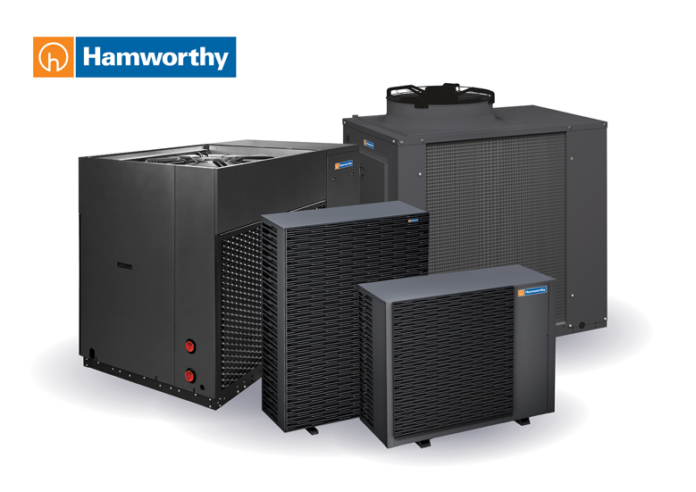
Hamworthy Heating, technical experts in commercial heating and hot water products, is pleased to announce the addition of a new 65kW model to its highly successful Tyneham 290HT commercial heat pump range.

This new model increases the range’s heating capacity to meet the growing demand for higher output systems while maintaining its commitment to energy efficiency and a reduced carbon footprint.

Now available in six outputs from 15kW to 65kW, the Tyneham 290HT range is designed to provide reliable and efficient heating across a variety of commercial settings, including schools, offices and leisure facilities.

Using natural refrigerant, the Tyneham 290HT can achieve higher flow temperatures, whilst benefiting from a low global warming potential (GWP) of just 3.  Highly efficient with a coefficient of performance (COP) rating of up to 4.94, the range also features an inverter-controlled compressor*, which adjusts the building temperature according to specific requirements, further enhancing its performance and efficiency.

Offering a flexible solution, units can be cascaded to achieve higher outputs, catering to larger buildings or facilities.  Furthermore, the Tyneham 290 can be integrated with other Hamworthy Heating products to create a hybrid heating system, offering even greater energy efficiency and supporting efforts to lower carbon footprints. Quiet in operation, with noise levels as low as 64db(A), the Tyneham 290 range is also an excellent choice for commercial buildings where noise control is a consideration.

Jason Allen, Commercial Product Manager, comments, โ€œWeโ€™re excited to introduce the 65kW model to the Tyneham 290HT heat pump range. As the industry shifts toward more sustainable energy solutions, this new model strikes the perfect balance of performance and efficiency for larger heating needs, supporting the transition to low-carbon technologyโ€.

As part of its commitment to supporting customers in their transition to low-carbon heating and heat pump technology, Hamworthy has also recently launched a new Commercial Air Source Heat Pump Training Course. 

This comprehensive training course covers the flexible wiring and programming options available with our Tyneham R32 and 290HT commercial heat pumps and explores product positioning and other considerations within the Tyneham range, to effectively integrate systems into commercial settings.

Also focusing on control strategies, ranging from simple make-and-break contacts to the latest technology that allows for sophisticated valve operation, hot water circuit management, and hybrid setups, the course also explores various solutions to integrate heat pumps into existing commercial heating systems, supported by schematics that bring these scenarios to life.

Delivered by HVAC professionals from the Groupe Atlantic technical team, the latest air source heat pump training resource is designed to help customers get the best out of their Hamworthy Heating products and stay up to date with the latest industry developments.

For more information on the Tyneham heat pump range or training courses available from Hamworthy Heating, please visit: www.hamworthy-heating.com or call 01202 662 552.

*Applies to 15,18,27,40 and 50kw models

New digital tool cuts costs for councils developing a Local Area Energy Plan by 20%

UK Power Networksโ€™ DSO is extending its partnership with energy data and software company Advanced Infrastructure to provide local authorities with free access to an online energy planning tool that is redefining how councils develop local area energy plans.

Developed by UK Power Networks and Advanced Infrastructure and co-designed with local authorities, the Local Area Energy Planning (LAEP+) Planning Tool makes it quicker and more cost-efficient for local authorities to develop their Local Area Energy Plans. Accessible via UK Power Networksโ€™ Your Local Net Zero Hub website, the tool helps councils accelerate investment in their local area. 

UK Power Networks was the first network operator in the UK to make the LAEP+ tool available free of charge to all of the 133 it serves in summer 2023. The platform has since been rolled out across the country with three other electricity network operators also making it available to some, or all, of the local authorities they serve. 

These plans can be shared with UK Power Networks DSO to inform their network investment strategy. LAEP+ provides powerful data, scenario modelling and project-building tools to support decarbonisation plans in an accessible way aimed specifically at local authority staff. 

Previously, collecting data and mapping out potential decarbonisation projects by local authorities was a manual and resource-intensive process. The LAEP+ planning tool addresses these challenges by streamlining data collection through improved collaboration, saving time and money for local authorities both in the short term, by providing their data, and in the longer term, shaping investment decisions on the electricity network that support their local delivery plans. 

The LAEP+ planning tool helps local authorities prioritise investment in carbon saving schemes such as retrofits by segmenting properties according to their suitability and eligibility for grant funding. To date, there have been over 200 projects created by local authorities signed up to the tool. 

The tool enables them to rapidly evaluate different scenarios to deploy retrofits and Low Carbon Technologies (LCT) in order to choose the optimum pathway to net zero and accelerate infrastructure roll out.  It is estimated the LAEP+ planning tool saves 20% on the cost of compiling a Local Area Energy Plan, based on cost data from local authorities and expert interviews.  

Lynne McDonald, head of Local Net Zero at UK Power Networks, said: โ€œLocal authorities told us it is important to have the right tools to plan effectively for their communities. Thatโ€™s why weโ€™ve made LAEP+ freely available to all 133 of our local authorities so they can build their local area energy plans faster, at lower cost.  Local authorities were involved in shaping the tool right from the outset, meaning it has been built and designed with their needs at its core. 

โ€œTogether with Advanced Infrastructure, weโ€™re making the journey to Net Zero more joined-up, more local, and more achievable for local authorities.โ€ 

Lily Cairnsย Haylor, head of product and co-founder at Advanced Infrastructure commented:

โ€œThe LAEP+ Planning toolย representsย a significant step forward in digital collaboration for network planning. By enabling local authorities and network operators to align on infrastructure needs in real time,ย weโ€™reย helping accelerate the transition to a low-carbon future while ensuring cost-effective and data-driven grid investments.โ€ย 

The tool can be accessed here: www.yourlocalnetzerohub.co.uk/home

GridVisยฎ software from Janitza addresses data centre energy management complexity

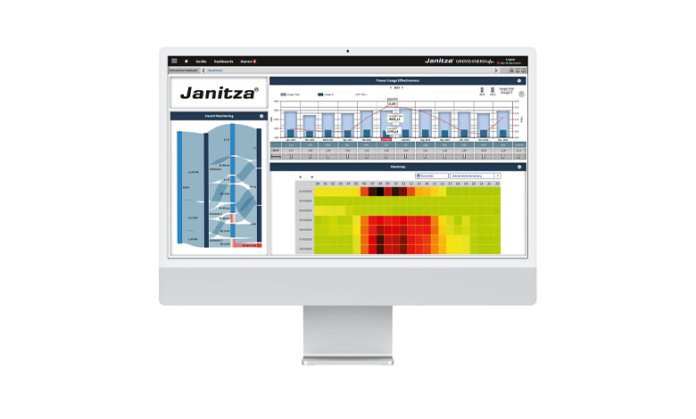
GridVis. Advanced power grid monitoring software from Janitza.

GridVisยฎ Power Grid Monitoring Software from Janitza is designed to help datacentres transform fragmented energy data into unified, actionable intelligence. It enables users to optimise energy management, ensure compliance with ISO 50001, and proactively monitor power quality through a scalable, helping organisations reduce costs, improve efficiency, and simplify regulatory reporting.

The Integration Problem

Datacentre operators typically face measurement data scattered across multiple systems: building management platforms tracking HVAC loads, DCIM tools monitoring IT equipment, and standalone power quality analysers protecting critical circuits. Each system operates in isolation, using proprietary protocols and data formats. This fragmentation prevents holistic analysis, obscures efficiency opportunities, and complicates compliance reporting for standards including ISO 50001.

Unified Data Architecture

GridVis consolidates measurement data from Janitza devices and third-party equipment through native OPC UA client functionality and Modbus TCP/RTU integration, for example to measure gas and water consumption. The software’s four-tier edition structure โ€“ Essentials, Standard, Expert and Cloud โ€“ allows organisations to deploy capabilities matched to operational requirements rather than purchasing unused functionality, and ensures compliance and visibility across diverse datacentre estates.

For example, the Expert edition supports key performance indicator (KPI) tracking, Sankey flow diagrams for visualising energy distribution, and customisable report generation that eliminates manual data compilation. Alarm management with escalation levels enables proactive response to power quality events before they impact operations, and software-based recording captures data from devices lacking onboard storage, extending monitoring coverage without hardware upgrades.

For multi-site operations, the Cloud edition provides centralised monitoring accessible via standard browsers without VPN requirements. Pre-configured dashboards display energy costs, consumption patterns and COโ‚‚ emissions across electricity, gas and water utilities.

Standards Compliance & Flexibility

GridVis supports compliance with key UK and Ireland standards including ISO 50001, offering automated data collection, baseline tracking, and audit-ready reports for streamlined energy management and regulatory reporting. With flexible REST API and CSV support, it enables easy integration with enterprise and legacy systems commonly used in the British and Irish markets.

Its scalable licensing means organisations can manage single sites or expand to multi-site operations in line with Energy Savings Opportunity Scheme (ESOS) obligations in the UK or Sustainable Energy Authority of Ireland (SEAI) audits in Ireland.

Summary

Janitzaโ€™s GridVisยฎ power grid monitoring software integrates energy management, power quality analysis and residual current monitoring in a scalable platform supporting datacentres from single-facility operations to multi-site enterprises.

  • Edition structure: Four software editions scaled from basic configuration to comprehensive enterprise energy management
  • ISO 50001 compliance: ESOS- and SEAI-recognised energy management software with automated data collection and audit-ready documentation
  • Universal connectivity: Native OPC UA client and Modbus TCP/RTU support for Janitza devices and third-party equipment integration
  • Cloud deployment: Browser-accessible monitoring across distributed sites without VPN or local software installation
  • Customisable dashboards: Drag-and-drop interface for personalised energy and power quality visualisation
  • KPI tracking: Performance indicator monitoring with Sankey diagrams for energy flow visualisation.
  • Alarm management: Proactive power quality event notification with escalation levels and email alerts
  • REST API access: Developer interface for enterprise system integration and custom applications

Janitza UK Limited

Janitza delivers smart measurement solutions for transparent energy โ€“ for greater efficiency and long-term sustainability.

Janitza offers energy measurement technology that helps customers to increase energy efficiency and monitor power supply reliability. The company, headquartered in Germany, provides a portfolio of versatile measuring devices and the matching GridVisยฎ Power Grid Monitoring software โ€“ complemented by high-quality system components.

Customers around the world benefit from Janitza solutions in the fields of energy data management, power quality monitoring, load management, and residual current monitoring โ€“ all within a single system environment. Made in Germany.

https://www.janitza.com

Trina Storage unveils Elementa 3, advancing safety, flexibility and system value for utility-scale energy storage

Trina Storage, a global leader in energy storage solutions,ย hasย announced the launch of Elementa 3, the latest generation of its utility-scale energy storage solution designed to meet the increasingly diverse and demanding requirements of global grid and renewable integration projects. Building on insights from hundreds of megawatt-hours deployed worldwide, Elementa 3 bringsย moreย flexible architecture, enhanced safety, and improved lifecycle value.ย 

Elementa 3 is equipped with Trina Storage in-house 587Ah high-capacity cell, increasing single-container capacity to 6.25 MWh. Through optimised module and enclosure design, the product delivers a 12.3% improvement in module energy density compared with the previous generation. Its compact system architecture increases site-level energy density by 24.7%, helping customers further reduce the Levelised Cost of Storage (LCOS) while maintaining installation and service accessibility. 

Recognising global concerns around BESS safety, Elementa 3 features a fully upgraded, multi-layer protection system spanning the cell, pack, and container levels. The product integrates early-warning detection technologies, high-sensitivity monitoring, and a sandwich-type fire-resistant enclosure delivering up to 2-hour full-cabin protection. Combined with gas fire suppression and optimised cell material engineering, further reinforced by UL-certified ฮ”T โ‰ค 2.5 ยฐC, Elementa 3 builds upon the proven safety foundation of the Elementa product family, which has recorded zero safety incidents across 12 GWh of deployed and operating capacity worldwide. 

To meet the needs of rapidly diversifying global markets, Elementa 3 is designed to operate reliably under extreme environmental conditions, from high temperatures and humidity to salt mist, dust storms, and seismic regions. With expanded system configuration options and enhanced integration flexibility, including multi-output architecture, Elementa 3 supports a wide range of applications such as renewable firming, energy shifting for market arbitrage, grid-support and stability services. These capabilities help project owners capture more revenue streams, improve dispatchability, and enhance overall project economics across both mature and rapidly developing markets. 

Elementa 3 has also been recognised with a 2025 French Design Award, announced on November 26, acknowledging its achievement in combining advanced technical performance with refined industrial design.  

โ€œElementa 3 represents an important step forward in our commitment to deliver safer, more efficient, and more integrated energy storage solutions to global customers,โ€ said Mr. Yang Bao, President of Energy Storage Division at Trinasolar. โ€œAs markets move toward larger systems, wider application portfolios and higher performance expectations, Elementa 3 is engineered to help project owners unlock greater economic returns, accelerate deployment, and operate with confidence even in the most challenging environments.โ€ 

Elementa 3 is part of Trina Storageโ€™s fully integrated cell-to-AC offering, incorporating in-house battery cell R&D and manufacturing, module, pack and container production, system engineering, PCS integration, and full-system AC delivery. This end-to-end capability improves component compatibility, enhances system stability, reduces project risks, and enables customers to achieve faster deployment and lower total cost of ownership. 

For more information, please visit: https://www.trinasolar.com/en-glb/elementa3/ 

Segen secures exclusive distribution of 3tiโ€™s breakthrough rapid-deploy smart solar EV Charging FastHub

The 3ti FastHub can be installed in less than a day and does not require planning permission or a grid upgrade.

Segen Ltd., the UKโ€™s largest distributor of renewable energy technologies, has announced an exclusive six-month distribution agreement with EV charging infrastructure provider, 3ti.

Under the deal, Segen will exclusively supply 3tiโ€™s award-winning, rapid-deploy smart solar EV Charging FastHub, Papilio3โ€”providing installers and EPCs with a ready-to-sell solution that meets the growing demand for fast, scalable EV charging infrastructure.

Believed to be the first rapid-deploy EV charging solution for commercial operators, the 3ti FastHub is equipped with 12 fast-charging 22 kW AC points, making it ideal for vehicle fleets, workplaces and destination charging sites. Its free-standing design means it can be installed in less than a day, with no planning permission or major groundwork required. Controlled by 3tiโ€™s patented intelligent power management technology, the FastHub operates from the customerโ€™s existing grid connection, eliminating the need for costly and time-consuming grid upgrades.

Solar power is provided by a 20 kWp array, mounted on the FastHubโ€™s roof and two adjustable wings that can be angled to maximise generation based on location and surrounding environmental features. The intelligent power management technology optimises energy use in real time, seamlessly balancing the load between on-site solar generation, grid-supplied electricity and EV charging demand.

With a compact footprint of 40ft, the FastHub is suitable for deployment in any car park with at least 12 parking spaces arranged in two back-to-back rows. It also offers a practical solution for rural areas, where limited grid capacity has traditionally constrained EV charging rollout. Integrated lighting, CCTV and a protective roof canopy add built-in security and shelter from the elements.

โ€œCommercial customers are facing a perfect storm: EV adoption is accelerating, but grid capacity, planning constraints and long installation timelines are holding back charging rollout.

The FastHub addresses this challenge head-on by giving businesses a fast, scalable, clean energy charging solution that can be deployed almost instantly,โ€ says Spencer Conday, Managing Director, Segen UK & Ireland.

โ€œFor installers, this opens up a significant new opportunity. Instead of navigating complex, multi-year projects, they can offer customers a rapid-deploy system that sidesteps grid upgrades, reduces installation complexity, and delivers immediate value. With this product in our portfolio, weโ€™re enabling Segen customers to expand their services, win more commercial work, and meet the growing demand for dependable EV charging infrastructure.โ€

Since its soft launch in 2021, the 3ti FastHub has been deployed by a number of leading businesses and public sector organisations, including the police, NHS and Network Rail, to support fleet electrification targets. Commercial customers include Segen itself, which has installed a system at its training academy and distribution centre in Medway, Kent. The installation offers convenient EV charging for staff and trainees, while showcasing Segen branding and digital displays for course and product promotion.

โ€œInitial demand for the Smart Solar EV Charging FastHub has been exceptionally strong, and weโ€™re now focused on expanding access to make this technology more widely available,โ€ says Jamie Birch, Sales Director at 3ti. โ€œPartnering with Segen was the obvious choice. As the UKโ€™s largest distributor of renewable technologies, they bring unmatched expertise, an extensive customer network and deep knowledge of our solution. Together, we can accelerate the rollout of EV charging infrastructure, helping end users to access reliable, scalable EV charging with minimal disruption and maximum efficiency.โ€

The 3ti smart solar EV Charging FastHub, Papilio3, is available to order now exclusively through Segen.

For more information, visit: https://www.segen.co.uk/news/new-product-3ti-papilio3/

EPC upgrades offers UK contractors & installers decarbonising opportunity

Josh Owen of the Rinnai Technical Design looks at some possibilities coming out of the forthcoming EPC scheme.

Plans to ensure that all rented properties across the UK will have a minimum EPC (Energy Performance Certificate) rating of C by 2030 are underway. Presently, just over 2.5 million rented properties maintain a rating in between D and G. This could offer a major business boost to the UK HVAC industry with an unprecedented commercial opportunity that could stimulate both regional and national economies.

An EPC (Energy Performance Certificate) evaluates and determines the energy efficiency of a property. The key areas within a property that an EPC analyses are its heating & hot water systems, the different building fabric that makes up the walls, floors & ceiling, the efficiency of its windows, lighting & renewable technology within the building. Once a final rating in between A and G is provided to the property a list of suggestions regarding upgrades will also be presented to the landlord. The current minimum rating for a rented domicile is E. For landlords to be able to continue letting properties a minimum energy performance certificate rating of C must be obtained. Each landlord will potentially have to upgrade rented domiciles with double glazing windows, cavity wall, and loft insulation to improve the buildings fabric โ€˜U-Valuesโ€™ and thus make the domicile more efficient. The UK government has calculated that homes that fall below the minimum C rating will have to pay in between ยฃ6,100 and ยฃ6,800.

Additionally, the new regulations could stipulate that landlords will have the frequency of EPC renewals shortened whilst HMOs (Houses of Multiple Occupancy) will require a valid EPC for the entire property once a single room is rented.

Consultants, specifiers, and installers should be aware that a substantial amount of work is required to enforce new regulations relating to a minimum EPC rating of C on rented properties by 2030.

Based on the support that the then Government set out in the consultation, it is estimated that the proposals cover around 85% of the non-domestic rented stock and will deliver up to 10.3TWh in energy savings by 2030, and 4.1MtCO2e of carbon (non-traded) over Carbon Budget 5 (2028-2032).

A large number of respondents during the consultative period highlighted that, whilst the then Governmentโ€™s ambition was appropriate, there were significant implementation issues that needed addressing to enable the policy to be successful. This conclusion was supported by the Governmentโ€™s pilot study, which ran from 2018-2019 and looked at how the enforcement of the PRS (Private Rented Sector) Regulations could be improved.

Rinnai UK is purposely positioned to offer a multitude of decarbonising options including heat pumps, solar hybrid systems, and electric cylinders, all of which provide high performance operation at proven lower costs.

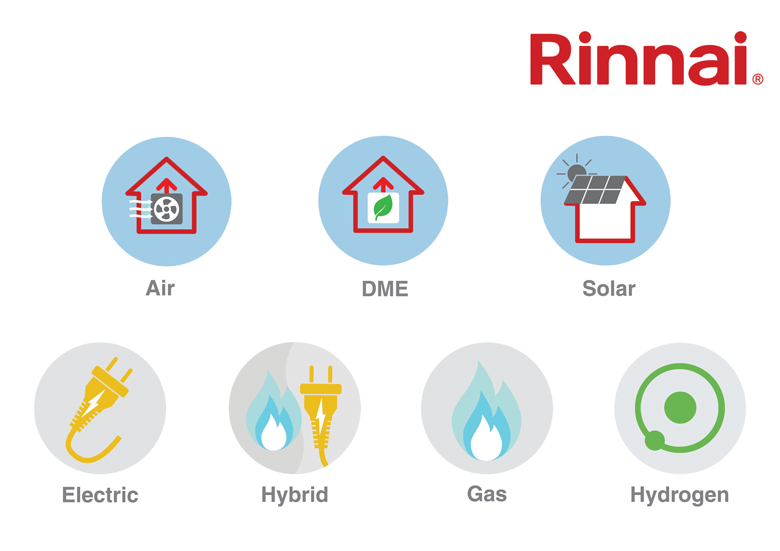
Rinnai systems can accept a wide variety of fuel sources including natural gas, hydrogen, solar and electric. Rinnai also offers several FREE services that are designed specifically to assist customer decision, such as a โ€œHelp Me Chooseโ€ service option is available at Rinnaiโ€™s website www.rinnai-uk.co.uk

This service enables easier product selection through direct contact with a Rinnai professional. A customer can be contacted either via a home number, mobile or email at a time convenient.

Rinnai further provides an array of cost calculation services that will measure your current systemโ€™s output in 5-year CAPEX, OPEX and carbon emission cost comparison. Once all relevant data is collected, a Rinnai team member can suggest an appropriate cost and carbon load reducing heating and hot water system that will accompany the dimensions of your property. Rinnai can guarantee product delivery to any site within 24 hours.

Rinnaiโ€™s selection of on-line services enables customer convenience from product viewing, selection and purchase. Rinnaiโ€™s inclusive CPDโ€™s, webinars, videos and calculation services ensure customers can access information that improves product knowledge and provides insight into product operational capabilities.  

Rinnai aims to inform all UK customers on any legislative amendments that impact energy or product options. Rinnai believe that information sharing improves customer decision making skills when selecting heating and hot water systems.


RINNAI OFFERS CLEAR PATHWAYS TO LOWER CARBON AND DECARBONISATION PLUS CUSTOMER COST REDUCTIONS FOR COMMERCIAL, DOMESTIC AND OFF-GRID HEATING & HOT WATER DELIVERY

www.rinnai-uk.co.uk/aboutus/H3

  • Rinnaiโ€™s range of decarbonising products – H1/H2/H3 – consists of hot water heating units in gas/BioLPG/DME, hydrogen ready units, electric instantaneous hot water heaters, electric storage cylinders and buffer vessels, a comprehensive range of heat pumps, solar, hydrogen-ready or natural gas in any configuration of hybrid formats for either residential or commercial applications. Rinnaiโ€™s H1/2/3 range of products and systems offer contractors, consultants, and end users a range of efficient, robust, and affordable low carbon/decarbonising appliances which create practical, economic, and technically feasible solutions. 
  • Rinnai is a world leading manufacturer of hot water heaters and produces over two million units a year, operating on each of the five continents. The brand has gained an established reputation for producing products that offer high performance, cost efficiency and extended working lives. 
  • Rinnai products are UKCA certified, A-rated water efficiency, accessed through multiple fuel options and are available for purchase 24/7, 365 days a year. Any unit can be delivered to any UK site within 24 hours.
  • Rinnai offer carbon and cost comparison services that will calculate financial, and carbon savings made when investing in a Rinnai system. Rinnai also provide a system design service that will suggest an appropriate system for the property in question.
  • Rinnai offer comprehensive training courses and technical support in all aspects of the water heating industry including detailed CPDโ€™s.
  • The Rinnai range covers all forms of fuels and appliances currently available – electric, gas, hydrogen, BioLPG, DME solar thermal, low GWP heat pumps and electric water heaters More information can be found on Rinnaiโ€™s website and its โ€œHelp Me Chooseโ€ webpage. 

RINNAI FULL PRODUCT AVAILABILITY 24/7 FOR NEXT DAY DELIVERY of ALL HOT WATER HEATING UNIT MODELS INCLUDING 48-58kW UNITS-

SAVINGS OF

20% REDUCTION of Opex Cost,

30% REDUCTION of initial cost

15% REDUCTION in carbon

75% REDUCTION of space

Visit www.rinnai-uk.co.uk  Or email engineer@rinnaiuk.com  

For more information on the RINNAI product range visit www.rinnaiuk.com


This article appeared in the Jan/Feb 2026 issue of Energy Manager magazine. Subscribe here.

FairHeat appointed by DESNZ to deliver interim supportย for Heat Network Technical Assurance Scheme

Gareth Jones

The Department for Energy Security and Net Zero (DESNZ) has appointed FairHeat to provide further technical support for further development of the Heat Network Technical Assurance Scheme (HNTAS). 

Heating the nationโ€™s 28 million homes is one of the largest sources of carbon emissions in the UK accounting for almost a fifth (18%) of total emissions. 

As part of its pathway to net zero the UK government wants to increase the percentage of UK households connected to heat networks from 3% to 18%, with the government taking a position that heat networks are often the lowest cost, low carbon heating option for high density urban areas.  

It is estimated that currently more than 1.1m people and more than 477,000 households are connected to a heat network in the UK with more than half of those households living in social housing. 

The Heat Network Technical Assurance Scheme (HNTAS) is being created to regulate heat networks to ensure that they meet a mandatory minimum level of performance and reliability. 

The new standards are considered a crucial piece of regulation to help deliver better outcomes for both customers and more reassurance for investors who are expected to invest between ยฃ60-ยฃ80bn in new heat networks by 2050. 

DESNZ first appointed FairHeat as lead technical author of HNTAS in 2022. 

Over the past three years FairHeat has worked extensively to develop the technical foundations of HNTAS, including drafting the forthcoming HNTAS consultation documents and the new heat networks Technical Standard (TS1). 

As part of its work on HNTAS so far FairHeat has engaged with around 111 organisations and 190 individuals to help deliver the UKโ€™s first ever regulations for heat network performance.  

News of the new appointment comes ahead of DESNZ publishing a consultation on HTNAS. 

This new contract ensures continuity of expertise as HNTAS moves into its final development phase before the new HNTAS regulations are officially introduced in 2026.   

Gareth Jones, Managing Director and Lead Technical Author, said: 

โ€œHNTAS is a key component in the regulatory evolution of heat networks in Britain that will guarantee minimum levels of heat network performance for customers. 

โ€œPutting in place robust technical specifications and standards will help unlock billions of pounds of private sector investment into heat networks in the UK and support good consumer outcomes for millions of households decarbonising their heat supply. 

โ€œFor heat networks to successfully support the UKโ€™s transition to a secure, decarbonised heat sector we need to ensure that heat networks reach the right standards during design and build and most importantly that they continue to meet these standards during their many years of operation. 

โ€œFairHeat is extremely proud to continue supporting DESNZ at such a pivotal moment for the heat network industry. 

โ€œThe extension of work by DESNZ is a testament to the depth and breadth of the skills and expertise in the FairHeat team and our collective belief that heat networks must provide reliable, efficient and affordable decarbonised heat for consumers.โ€  

www.fairheat.comย 

SP Energy Networksโ€™ Award-Winning LANIT Tool Supercharges Local Energy Planning

SP Energy Networksโ€™ Local Authority Network Insight Tool (LANIT) has been named Best Innovation: Software and Services at the Scottish Green Energy Awards, recognising its role in transforming how councils and regional bodies plan for the UKโ€™s energy future.

LANIT gives local authorities and transport organisations real-time visibility of electricity network capacity, potential constraints, and indicative costs – before they submit formal connection requests. This means projects like EV charging hubs, heat pump rollouts, and solar installations can be planned with increased confidence, reducing unnecessary delays and costs.

Demand for low-carbon technologies like electric vehicles and renewable generation is rising sharply, putting pressure on electricity networks. SP Energy Networksโ€™ tool helps bridge the gap by making complex grid data accessible and actionable for non-specialists.

Proven impact:

  • Supported energy planning forย 40 local authorities,ย 12 regional bodies, andย 3 transport providersย in 2024/2025
  • Deliveredย 2,000+ optioneering studies, saving an estimatedย ยฃ1.3 millionย by reducing speculative applications and streamlining planning
  • Enabled early-stage decarbonisation planning forย 22 local authorities

LANIT combines live network data with advanced analysis to simulate grid impacts and suggest cost-effective alternatives. By removing barriers to information, SP Energy Networks is helping local authorities make informed investment decisions, reduce waste, and accelerate renewable adoption.

Mark Goudie, Head of DSO Strategic Projects & Optimisation at SP Energy Networks said, โ€œLocal authorities are at the heart of the UKโ€™s energy transition. LANIT gives them the insight they need to support energy planning and enable the delivery of projects that underpins Local Heat and Energy Efficiency Strategies (LHEES) and Local Area Energy Plans (LAEPs) that ultimately benefit communities and the environment.โ€

Paul Kilby, Regional Partnership Manager at Glasgow City Region said, โ€œWeโ€™re aiming to increase the number of publicly available EV chargers in the city region โ€“ and identifying feasible locations for these is key. The support of SP Energy Networksโ€™ LANIT tool has helped us to understand the available capacity of the local electricity grid and will allow a smoother network delivery plan to be developed based on network availability and costs.โ€

https://www.spenergynetworks.co.uk

New E.ON report outlines six lessons from Europe to accelerate UK Heat Zonesย 

Drawing on its experience and innovation across cities such as London, Malmรถ and Berlin, E.ON has published a proposed roadmap for UK decision-makersย  to consider, as the country moves from building-by-building energy upgrades to place-based Heat Zones.ย ย 

The report sets out six practical lessons for delivering clean, reliable heat at scale while improving urban places and developing local jobs and skills. 

  • The report โ€“ A new green infrastructure for UK cities: Six key lessons from Europe โ€“ distils decades of E.ONโ€™s partnerships and hands-on delivery of heat networks at city scaleย 
  • E.ON supplies heat to 500,000+ customers across ~800 district heating schemes in Europe and operates 70+ UK networks serving 50,000+ customersย 
  • E.ON Group has ยฃ4.4bn (โ‚ฌ5bn) committed to energy infrastructure solutions over the next five years, with ยฃ1bn earmarked for UK Heat Zones*ย 

The report comes amidst ambitious plans for Heat Zones in the UK as the Government brings forward statutory heat-network zoning in England under the Energy Act 2023 and proposed secondary legislation. By 2050, heat networks in densely populated areas are expected to supply around 20% of UK heat as part of net-zero and energy-security plans. 

Distilling the greatest lessons from its decades of experience in London and across Europe, E.ONโ€™s report explains how a supportive regulatory and commercial framework can crowd in large-scale private investment while protecting consumers. It illustrates how coordinated street works can leave streets better than before โ€“ improving public realm, drainage and active travel routes โ€“ as networks expand. It highlights the need for clear customer propositions that help households use less energy and pay less, alongside programmes that tie investment to apprenticeships schemes and local supply chains, so Heat Zones build skills and social value, as well as infrastructure. 

E.ON also explains how city-scale networks in places like Malmรถ and Berlin are future-proofed to add new low-carbon and waste heat sources โ€“ from rivers and wastewater plants to data centres โ€“ as demand grows.ย  The paper makes clear how Heat Zones have the potential to deliver a range of benefits โ€“ including increased energy resilience, less embodied carbon, and lower energy bills in the long run โ€“ for commercial landowners and consumers.ย ย 

The six lessons 

  1. Plan for scale and growth โ€“ design the network to cope with city-wide growth from day one, so later phases can connect to heat sources without the need for major infrastructure works.ย 
  2. Anchor heat zones around existing sources โ€“ rivers, sewage works, data centres and energy-from-waste can all provide heat energy for local networks.ย 
  3. Create a supportive regulatory and commercial framework โ€“ measures such as capital and revenue support, industry cost reductions and a Regulated Asset Base** help to accelerate delivery of Heat Zones.ย 
  4. Coordinate street works and public realm upgrades โ€“ infrastructure upgrades are the perfect time to improve our streets and public spaces โ€“ adding cycleways, drainage and trees โ€“ while minimising disruption.ย 
  5. Support and incentivise customers to connect โ€“ pair clear connection pathways with propositions that cut consumption and costs.ย 
  6. Harness investment for skills and jobs โ€“ link programmes to training, apprenticeships and local supply-chain growth.ย 

Vijay Tank, Chief Operations Officer for UK Energy Infrastructure Solutions at E.ON, said: 

โ€œCities create sources of heat everywhere we look. From the local data centre powering your wi-fi, to the nearby sewage works and energy from waste plants, or even the fridges in your local supermarket providing a source of heating โ€“ this energy is abundant, but sadly it is too often simply lost to the air. 

โ€œThere is enough heat wasted in London every year to meet 38% of the cityโ€™s heating demands***. Harnessing and recycling some of that energy โ€“ as we already do through our district heating networks โ€“ could keep a cityโ€™s homes, businesses, and shops warm without the need to generate any excess energy. 

โ€œAnd if that wasnโ€™t enough, it would be a chance to create tens of thousands of skilled jobs, greener spaces in our cities and secure cleaner and more affordable energy supplies for the future.โ€ 


*Heat zones are designated geographical areas where local authorities and partners plan and coordinate heat networks; making connections the default, sequencing works to minimise disruption, and crowding-in long-term investment to expand reliably over time. 

**Regulated Asset Base (RAB) is a financial model used for large-scale infrastructure projects to attract private investment by guaranteeing investors a return on investment over the project’s lifetime.  

*** According to GLA data