


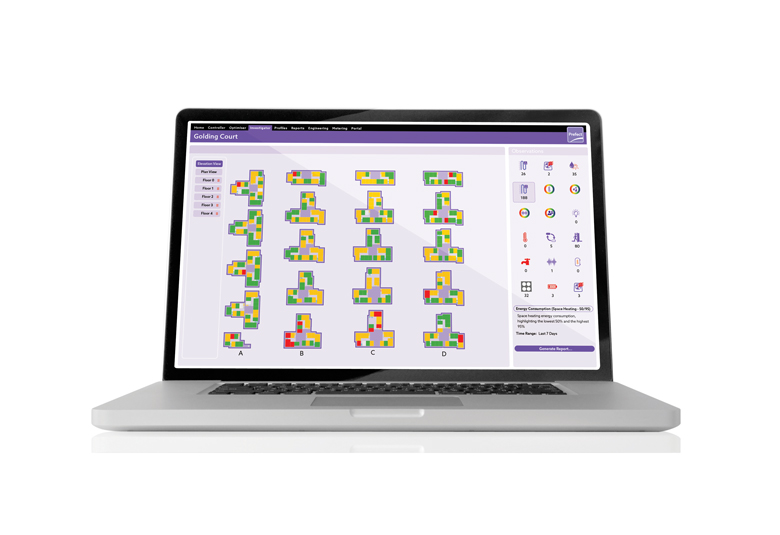
Improving energy performance across high-density, multi-occupancy residential portfolios has become increasingly challenging as energy costs remain volatile. For owners, investors and asset managers, rising utility expenditure directly affects profitability, asset value and long-term portfolio resilience. While traditional approaches such as deep retrofits or full building management system (BMS) replacements can deliver meaningful savings, they are often capital intensive, disruptive to residents and slow to generate return on investment. As a result, there is growing interest in lower-cost, faster-to-deploy alternatives that deliver measurable outcomes without major capital expenditure.
Monitoring is more valuable with integrated automated control
Data-driven energy management and control platforms are emerging as a practical solution. By enabling real-time monitoring of heating systems, energy meters, and water usage, these systems provide continuous visibility into building performance. This level of insight allows energy managers to identify and control inefficiencies such as poor heat distribution, underperforming plant or abnormal consumption patterns before they escalate into costly issues or tenant dissatisfaction. Automated alerts highlight consumption spikes at room level, supporting targeted intervention and more proactive maintenance strategies. While automated control saves time.
Operational Efficiency isn’t improved by relying on human intervention
Physically turning energy input on and off is key to real savings. If this is automated, then the savings go beyond utility costs alone. The need for people to react and respond to flags from ‘monitoring only systems’ is removed, enabling them to concentrate on higher level, more productive tasks.
Unlike traditional BMS upgrades, which often require extensive rewiring, hardware replacement and system downtime, modern retrofit solutions integrate with existing infrastructure. This significantly reduces installation costs and disruption, while accelerating payback periods. Intelligent monitoring platforms can consolidate multiple data streams into a single interface, enabling anomalies to be detected quickly and automated response to happen in real time. Automated analytics that trigger control adjustments, improve system efficiency without manual input.
Building services performance increases asset value
The financial implications are substantial. Improved energy performance reduces operating costs and contributes directly to Net Operating Income (NOI), helping to protect yields in a market where margins are under pressure. At the same time, efficient, well-managed buildings are more attractive to both tenants and investors, particularly as sustainability considerations become central to decision-making. Access to accurate, real-time consumption data also provides a robust evidence base to support investment decisions and demonstrate performance improvements.
Happier residents, and more satisfied Asset Managers and Investors
For operators of purpose-built student accommodation (PBSA) and build-to-rent (BTR) assets, maintaining consistent comfort levels is critical. Real-time monitoring enables more precise control of heating and utilities, reducing complaints and improving resident satisfaction. It also allows for better forecasting of demand, more efficient maintenance planning and the elimination of unnecessary energy use, ensuring that cost savings do not come at the expense of service quality.
Sustainability is another key driver. Increasing regulatory pressure and investor scrutiny mean that asset managers must be able to demonstrate measurable progress towards net-zero and ESG targets. Data-led platforms provide the granular, auditable information required for credible reporting, helping organisations track emissions, manage consumption and identify further opportunities for carbon and water reduction.
The panacea – Resident Comfort, Operational Efficiency AND Increased Asset Value
Ultimately, smart energy management offers a scalable, cost-effective route to improving building performance. With real-time data and intelligent controls, stakeholders can enhance operational efficiency, protect asset value and support sustainability objectives without the need for major capital investment. In an environment defined by rising costs and tightening regulation, this approach is becoming essential to keeping residential portfolios competitive and future ready.
This article appeared in the May 2026 issue of Energy Manager magazine. Subscribe here.
