


Executive Summary:
Many estates teams still manage energy reactively through manual processes, even as rising financial, operational and sustainability pressures demand smarter, faster decision‑making. Platforms like E.ON Optimum provide the clarity and connected insight estates need by turning complex data into actionable intelligence across multiple sites. This gives teams the confidence to focus resources effectively and maintain critical operations. With the right digital tools, energy becomes something organisations can proactively shape, enabling earlier detection, smarter management and a more resilient future.
For many estates teams, energy management still means spreadsheets, static PDFs and monthly bill checks – important but largely reactive tasks. As pressure on public and commercial estates increases, organisations need to act faster to control costs. Energy now underpins wider priorities such as financial stability, operational resilience and sustainability. Despite this, many teams still lack a clear link between energy use and these broader outcomes.
This gap isn’t due to a lack of effort. Most estates teams are juggling ageing infrastructure, limited resources and competing expectations. They’re asked to reduce costs, cut carbon and provide clearer insights with less time. As a result, energy often becomes a background task: important but not urgent until something goes wrong.
Driven by the rapid digital transformation, a new mindset is taking shape across the sector. Energy is increasingly viewed not just as an overhead, but as a strategic operational asset, one that can unlock resilience, efficiency and measurable value when supported by advanced analytics and modern technology. In certain cases, energy can even become a revenue stream for businesses.
Organisations are beginning to recognise that the way energy behaves across an estate can reveal much more than consumption trends. It can uncover failing equipment before it breaks. It can highlight inefficiencies invisible to the human eye. It can show where budgets will come under pressure months before invoices arrive. And when managed proactively, it can even unlock breathing room for teams who are stretched thin.
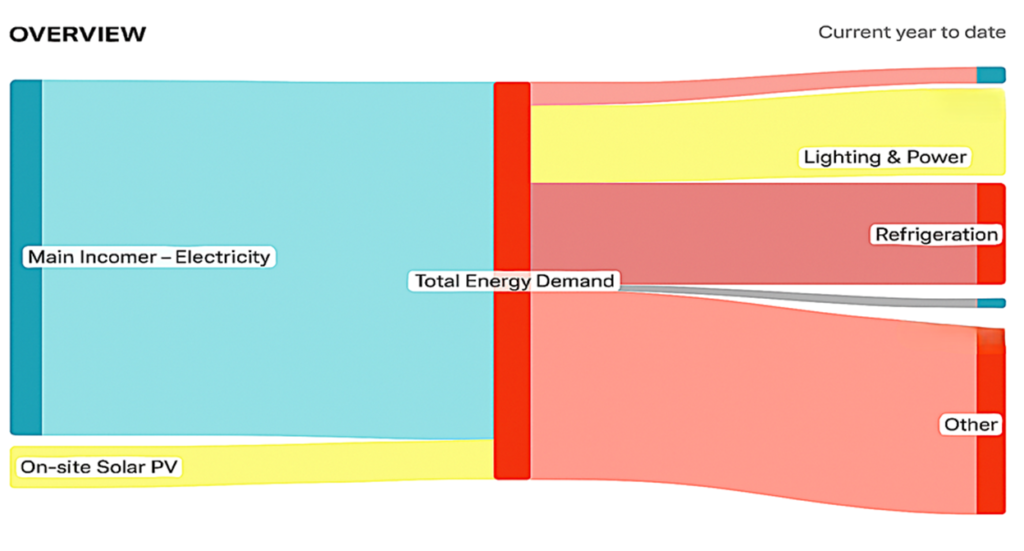
To do this, estates need more than data. They need clarity and connection – the ability to join the dots between systems, sites and outcomes. This is where digital platforms like E.ON Optimum are shifting expectations. Rather than simply showing usage, they make energy understandable, comparable and actionable across entire estates. They reshape data into insight by combining energy data with business indicators to provide context and help turn insights into actionable decisions with measurable outcomes.
Most importantly, they bring confidence. For a local authority managing dozens of ageing buildings, confidence means knowing where to focus limited resources. For a logistics operator, it means preventing energy related interruptions that impact throughput. For a healthcare or emergency services estate, it means ensuring critical environments stay operational, efficient and cost controlled. But what could it mean for your business? Are there metrics that would provide context for your energy data?
Energy will always be complex. But with the right digital intelligence, it becomes something that organisations can shape and benefit from, not just respond to. As estates face increasing uncertainty, the real opportunity lies not in monitoring more closely, but in managing smarter, detecting earlier and actioning with clearer purpose.
Platforms like Optimum aren’t just improving energy visibility; they’re enabling a more resilient, more strategic future for businesses like yours.
If you’re ready to rethink what energy management can deliver for your estate, simply scan the QR code to begin the conversation.
This article appeared in the May 2026 issue of Energy Manager magazine. Subscribe here.
