


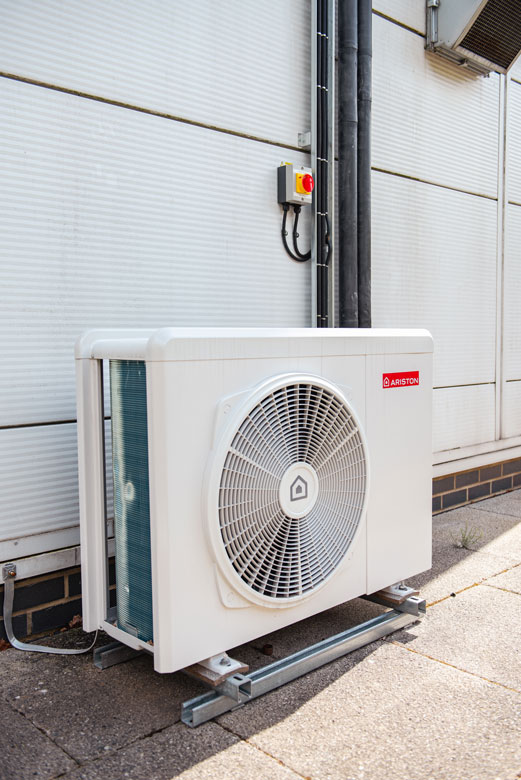
As the UK makes the transition to more net zero initiatives, the release of the new Future Homes Standard (FHS) is paving the way for low-carbon housing, with energy-efficient technology, hybrid heating systems and renewable energy sources required in all new build homes from March 2027.
Heat pumps are at the forefront of this transition and have gone from an emerging alternative to the new benchmark for complying with industry regulations. Carolina Allegrini, Business Intel & Product Marketing Manager at Ariston explains the importance of getting ahead of the curve and delivering complete and efficient solutions that support installers, developers and homeowners.
Why heat pumps are central to compliance
The new FHS rules mean that new build homes will have to emit 75-80% less carbon emissions than current standards. Heat pumps are the primary technology capable of meeting these rigorous targets, as low-carbon heating methods see a swift uptake following the ban of fossil fuel boilers in new build homes.
Significant steps are being taken towards achieving the UK’s net zero goals, elevating heat pumps from a sustainable alternative to the default choice. Operating at a higher level of efficiency than traditional boilers, heat pumps reduce greenhouse gas emissions and contribute to a fully decarbonised national grid, helping homeowners to reduce their energy bills.
In addition to their sustainability credentials, heat pumps are considered the default option for FHS as they can be integrated into existing systems and can even upgrade current homes that were built to the old standards. This means that they can be combined with further energy saving measures such as solar panels, battery storage and EV charging, contributing to a generation of new build homes that are not only sustainable but will help homeowners significantly reduce their energy costs.
Support for installers when they need it
Heat pump installations are seeing sharp surges and this momentum is expected to rise even more with the introduction of the FHS. Installers and contractors that opt to upskill and train in renewable technologies early could not only futureproof their careers but could also build a wider customer base, work on larger projects and command a higher earning potential compared to those who upskill later on.
Ariston offers dedicated training centres around the UK, with comprehensive sessions that cover a mix of practical and theory work for installers wishing to learn new skills. With dedicated classrooms, tailored training solutions and technical training areas, Ariston’s specialist training includes topics such as system design, installation, commissioning, service, maintenance and troubleshooting. Depending on experience and skill level, engineers can expect to complete this training in around 2-3 days before going on to develop their careers even further.
Installers can also register with Ariston’s Expert platform and become an Approved Installer. This will afford them additional benefits such as access to dedicated marketing support materials, enhanced warranty and service packages, and technical support. This can support them further with elevating their professional reputation, securing new revenue opportunities and positioning them at the forefront of the industry as it adapts to the new standards.
Upskilling and getting certified will not only help engineers and installers to boost their careers but will mean that they’re in high demand when house developers need trusted partners to meet the new FHS requirements. Heat pump installation will become more expensive when installed reactively, so getting ahead of the curve is vital as developers look to expedite the process in order to meet the new regulations deadline.
Looking to a brighter future
The timeline has been set for energy-efficient new homes, but the scheme’s success depends on the speed at which installers can adapt and upskill, and the scale at which manufacturers are able to deliver heat pumps that are thoughtfully designed, easy to install and backed by a team of technical experts to ease the transition.
With the implementation of the FHS, the UK has confirmed the next stage for its net zero goal. For those who are ready to move forward, Ariston looks forward to welcoming the new standards and supporting the next generation of installers, contractors and specifiers to create greener homes.
For more information on Ariston’s range of solutions, visit: www.ariston.com/en-uk/ Or explore our profile on NBS source: Ariston Group UK Ltd | Overview | NBS Source.
