

Anthony Ainsworth, Chief Operating Officer, npower Business Solutions
Over the past two years, businesses have had to deal with a hugely volatile energy market. High prices have seen many organisations reprioritising where and how they invest their capital, with sustainability measures falling down the list for many.
As a result, the role of Third Party Intermediaries (TPIs) has become increasingly important, particularly when it comes to advising organisations on energy purchasing strategies and the most appropriate measures to invest in that deliver maximum returns.
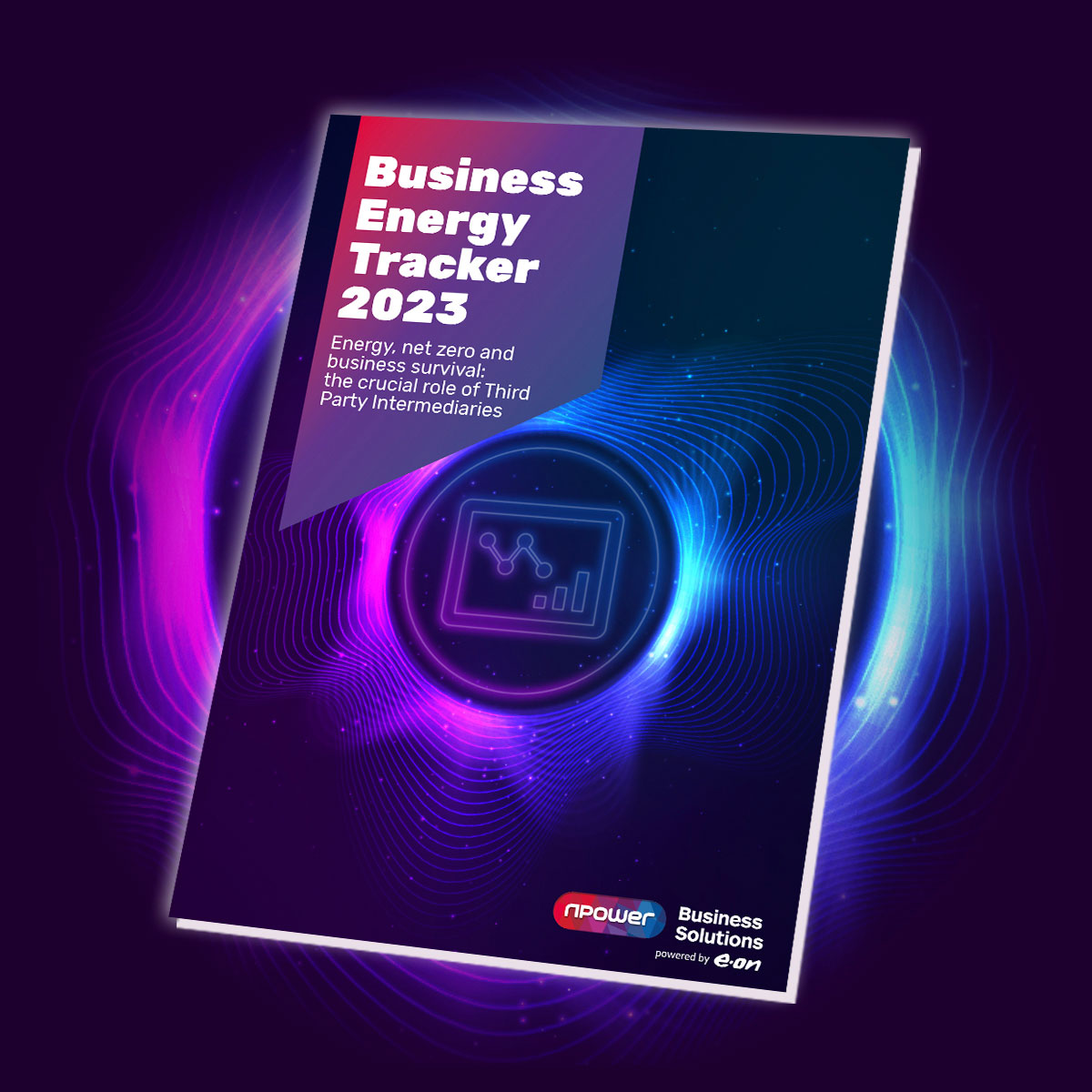
That is why we recently launched a new version of our Business Energy Tracker report, Energy, net zero and business survival: the crucial role of Third Party Intermediaries. Alongside the 100 businesses that participated in our original report, the updated edition now includes the views of more than 50 Third Party Intermediaries (TPIs).
We work closely with TPIs across the country, and believe that, to get a full understanding of the perspective of business energy users, their views need to be taken into account.
Therefore, this updated edition of the Business Energy Tracker represents a collective voice of both TPIs and businesses on today’s key energy issues.
So, what did they tell us?
Energy was the biggest risk their customers faced in 2023
Global wholesale energy volatility, the cost-of-living crisis, rising inflation and political upheaval have all had an impact on business confidence.
As a result, the report revealed that more than half (55%) of TPIs say energy was the biggest risk their business customers had faced, with 84% stating that energy is now firmly a board level concern.
In addition, the TPIs we interviewed highlighted the important difference between commodity and non-commodity costs, predicting that the largest increases will come from non-commodity charges. This is because the UK will need to invest in infrastructure, such as upgrading the transmission network, to help the UK move towards net zero.
Longer term government support is needed
TPIs also believe that more can be done to support organisations through challenging economic conditions. Almost three quarters (71%) felt that the Energy Bills Discount Scheme (EBDS) – which was introduced on 1 April 2023 as a replacement for the Energy Bill Relief Scheme (EBRS) and is due to end on 31 March 2024 – didn’t go far enough to support businesses.
As a result, they told us that a long-term strategy to help businesses reduce overall energy demand needs to be a top government priority.
Organisations back net zero, but the cost of delivery is a concern
Linked to this is how TPIs believe their customers are prioritising net zero. The good news is that many said their customers were being proactive, by investing in energy efficiency, using energy management tools, switching to renewable energy and installing on-site generation. In fact, energy efficiency was seen as the top way businesses could manage energy risk.
However, concerns around the cost of funding and delivering the net zero transition are high, with 87% of TPIs saying their customers are very or a little concerned about the potential economic impact on their operation. In fact, one told us that, “Although they (our customers) want to be doing the right thing and go ‘green’, some of them just can’t afford it at the moment.”
So, while many TPIs and the businesses they work with understand the commercial, environmental and reputational benefits net zero can bring, it is clear that responding to the economic challenges of the here and now has become the primary focus.
A proactive approach can pay
What this latest version of the Business Energy Tracker has told us is that future government support needs to be pro-business and focus on both supply and demand. While new policies such asthe Energy Act provide a more certain pathway for energy security, a focused and long-term approach is needed to enable businesses to reduce energy demand and improve their energy efficiency.
With a General Election likely to take place in 2024, there is a real opportunity for political parties to introduce pro-business policy that supports the important contribution organisations will make to both energy security and net zero.
That said, TPIs, alongside energy suppliers, have an important role to play to help their customers understand the best measures they can invest in right now, to lower energy demand and reduce risk. An informed and proactive approach to a business’s energy strategy can pay dividends in terms of reduced costs and carbon emissions.
