


As world leaders at COP28 announce initiatives to phase out fossil fuels, new research reveals that the British public supports net zero but is largely in the dark about how much pressure UK electricity generation will be under on the road to get there; with over 95% underestimating how much more electricity the nation will need by 2050.
Electricity demand in the UK is estimated to more than double by 2050, the Government’s deadline for hitting our net zero target, as more daily activities are powered by clean electricity.
Despite 37.4 million electric vehicles estimated to be on the roads and electric-powered heat pumps needed in at least half of UK homes by 2050 more than a third (35%) of the public believe electricity demand will grow by less than 20% – five times lower than reality.
Zero carbon electricity generation technology will hold the key to meeting this national demand, yet only 3% of the public really understand how much more zero carbon electricity will be needed by 2050. And despite Brits being aware that zero carbon electricity sources such as nuclear (30%), solar (18%) and wind (17%) are the most reliable options for meeting future demand, confusion remains over the environmental impacts of how our electricity is generated.
Alongside generating 100% of zero carbon electricity from wind farms and nuclear plants, which do not emit CO2 from generation, EDF is helping people to be more efficient and reduce their energy bills and carbon footprint with smart and innovative solutions. This includes supplying heat pumps, energy efficiency upgrades, smart metres, EV charging solutions and solar panels. By 2035, EDF plans to enable investment in 15GW of wind, nuclear and solar generation – that’s around 20% of the UK’s current energy needs.
Despite fossil fuels being the largest contributor to global climate change, a fifth (21%) of the public still believe that they are an environmentally friendly way of generating electricity in the future. Worryingly, this view is prevalent in the younger generation – rising to 28% of those aged 18-24.
This lack of understanding could be a barrier to reaching our net zero ambitions, which Brits tend to support. More than three quarters (77%) of Brits are worried about the UK reaching its targets and making efforts to reduce their personal carbon footprint by reducing waste (51%), adopting greener travel options (49%) and buying more energy efficient home appliances (45%).
As the UK’s largest generator of zero carbon electricity, EDF has invested almost £25bn in the last 25 years since entering the UK market in 1998. By 2035, the company will have enabled an ambitious £50bn investment into wind, solar and nuclear generation targeted to generate 15GW of zero carbon electricity, equating to a fifth of the nation’s demand.
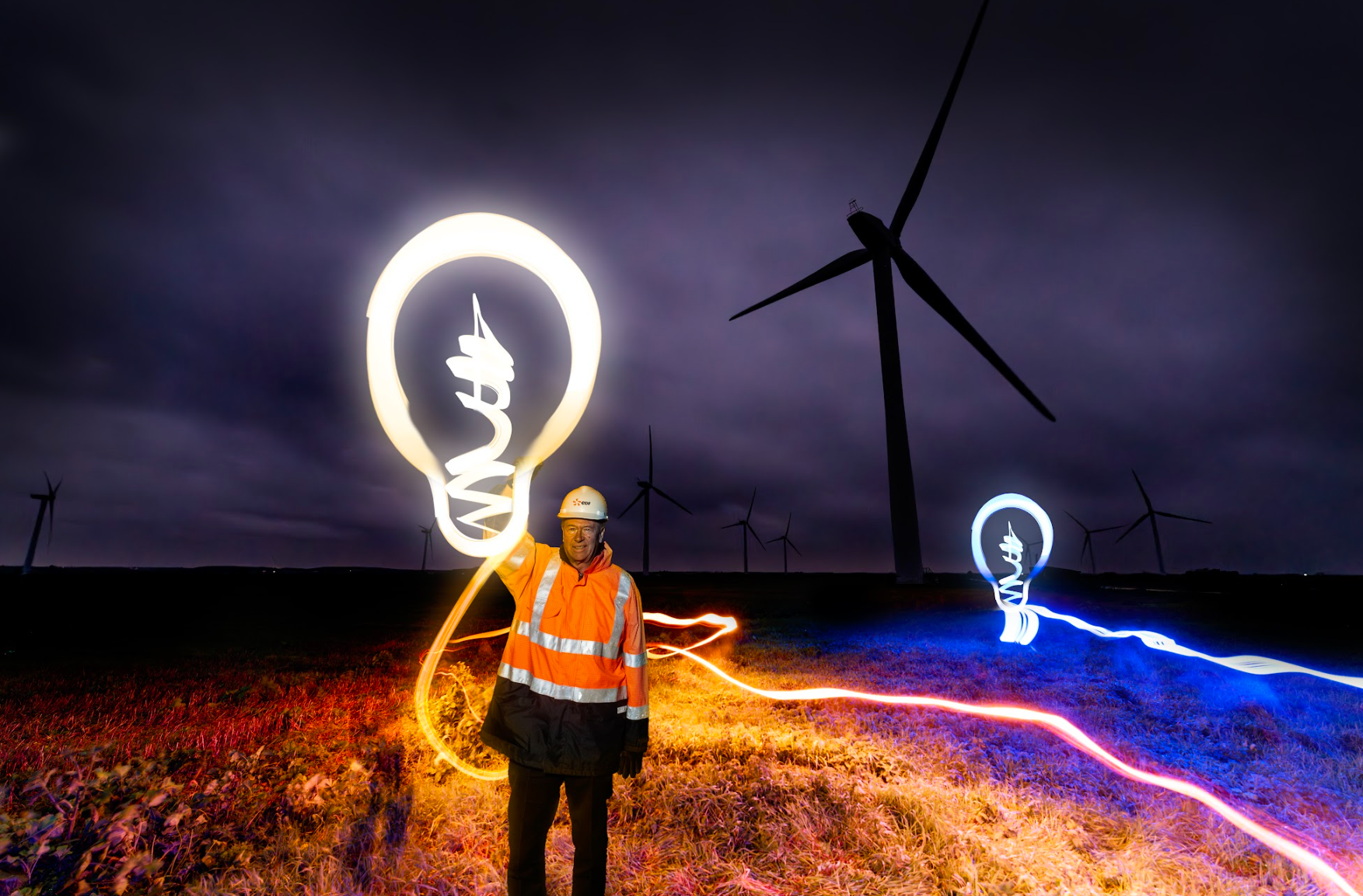
To look ahead and mark its ambitions to the next 25 years of zero carbon electricity output, EDF has created an eye-catching piece of light art featuring an EDF employee called Bill Willcox to highlight the work needed to help meet the UK’s net zero electricity demands.
Simone Rossi, CEO at EDF in the UK, comments: “Generating more zero carbon electricity will be absolutely crucial to net zero. Right now governments are coming together at COP to launch new initiatives to increase zero carbon generation methods such as nuclear.
“Yet, it is clear from our research that industry and Government must do more to switch people on to the plans for a clean energy future. The key is not just more capacity, it is more efficiency too, and everyone can play their part in that.
“Since entering the UK market 25 years ago this month, EDF has invested almost £25bn to help consumers and the nation save both cash and carbon, and we are committed to continuing on this journey for the next 25 years and beyond.”
Through enabling the £50bn investment, EDF is not only helping make electricity generation fit for the future, but also supporting more than 100,000 British jobs through the supply chain – including 30,000 training places at Hinkley Point C and at least 2,500 nuclear apprentices – with 1,311 already trained so far at Hinkley Point C and a commitment to train 1,500 at Sizewell C.
