




In this article, Tom Davies, Sales Manager for Energy Control at fortop Automation & Energy Control (fortop UK), explores how improving power quality and energy management is essential for industrial facilities to achieve Net Zero goals and comply with schemes such as the Energy Savings Opportunity Scheme (ESOS).
Technical Managers in Industry Face Major Challenges
Heavy industry and manufacturing sectors are under increasing pressure to reduce carbon emissions and energy costs. With the transition away from gas and the rapid adoption of advanced electronic machinery, electrical pollution is becoming a significant issue. The reliable operation of industrial equipment is increasingly at risk due to poor power quality.
Electrical Energy Supply in Industrial Facilities
Factories and industrial plants have seen a significant rise in the use of electronic devices and automation systems. Robotics, CNC machines, VSDs and VFDs, and advanced process controls are now indispensable. While these technologies boost productivity and efficiency, they also introduce new challenges for energy management and power quality.
Energy-saving solutions such as solar panels, LED lighting, and frequency-controlled drives are widely implemented. However, these devices, along with industrial equipment, can introduce pollution into the power grid, affecting voltage and current quality. Modern machinery is often sensitive to the very disturbances it helps create, leading to:
- Increased risk of system failures from voltage sags and current peaks
- Emergency power systems failing due to capacitive loads, harmonic pollution, and unbalanced loads
- Higher maintenance costs and more frequent malfunctions due to increased network pollution from mechanical installations, automation equipment, LED lighting, and solar panels
- Greater load on the neutral conductor due to unbalanced phases and network pollution
- Increased transformer burden resulting from network pollution and asymmetric loading, compounded by harmonic distortion and phase imbalance on the load, leads to further derating of the transformer
- Ever more stringent legal requirements regarding electrical energy quality and responsibilities
These trends make electrical energy systems harder to manage. Emergency power operations may fail, and voltage sags can cause production line stoppages or even temporary plant shutdowns. The costs of poor power quality are often hidden within maintenance budgets, making them difficult to track.
Voltage and Current Quality in Power Monitoring Systems
Most energy monitoring systems in industrial facilities are linked to SCADA/Factory Automation Systems and focus primarily on energy consumption. However, the health of voltage and current is often overlooked. Electrical disturbances and power quality issues frequently go unrecorded, making it difficult to diagnose failures, a situation that is no longer acceptable for modern industry, especially with ESOS and Net Zero targets in focus.
Leveraging its experience in critical applications to ensure voltage and current availability under all conditions fortop UK applies a unique chain of competencies: measuring, monitoring, and improving.
The Four Management Aspects of Electricity
Power optimisation is a continuous improvement process involving measurement, monitoring, and optimisation to prevent failures, reduce energy and maintenance costs, and minimise the impact of malfunctions. This process focuses on four key aspects of electricity:
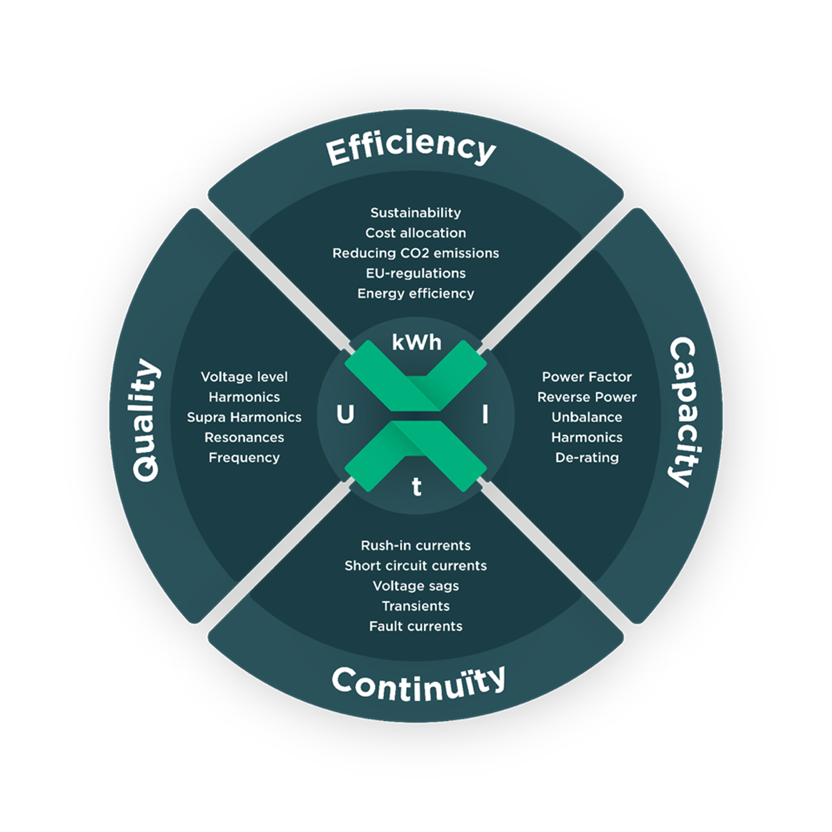
1. Energy Efficiency (Consumption)
Mandatory energy audits and increasingly stringent regulations – such as ESOS – make continuous insight into energy flows essential. By visualising energy consumption, awareness and engagement in energy-saving measures increase, and their impact can be continually assessed. This approach enables accurate allocation of energy costs to different departments or production lines. Monitoring power consumption across installations helps identify energy losses, standby consumption, and metering connection errors immediately.
2. Load (Current)
Facility managers need a clear understanding of available capacity within the electrical system without requiring costly expansion. When switching to backup generator operation, it is crucial to know how much power is available for connected equipment. Harmonic pollution, low power factor (cos-phi), and unbalanced loads place additional stress on transformers and generators. The dynamic behaviour of loads makes prediction challenging, necessitating insight into daily, weekly, and yearly load profiles.
3. Quality (Voltage Quality)
A healthy voltage supply lowers maintenance costs, prevents failures, and conserves electrical energy. It also provides clarity and responsibility allocation, which is essential in liability cases following equipment failures. Voltage quality standards play a crucial role in determining whether industrial equipment can be connected and whether warranties apply.
4. Continuity (Sags, Swells, and Residual Currents)
Voltage sags and current peaks can cause failures in parts of the electrical installation. Timely alerts shorten downtime by enabling faster troubleshooting. By recording dips and peaks with a resolution of 50 microseconds, the root cause can be identified, and appropriate measures can be taken to mitigate negative impacts.
Integrating Power Quality into Power Monitoring Systems
When integrating energy measurement systems for energy efficiency, it is essential to incorporate voltage and current quality into the monitoring concept.
Three Steps to Lower Consumption, Reduced Maintenance Costs, and Fewer Failures
Power optimisation is a continuous improvement process involving measurement, analysis, and optimisation, aiming to reduce energy consumption, lower maintenance costs, and minimise failure risks.

Step 1: Continuous Measurement with Power Analysers
To support continuous improvement, 24/7 measurement is essential to enable trend analysis, verification of energy savings, and real-time alerts for incidents.
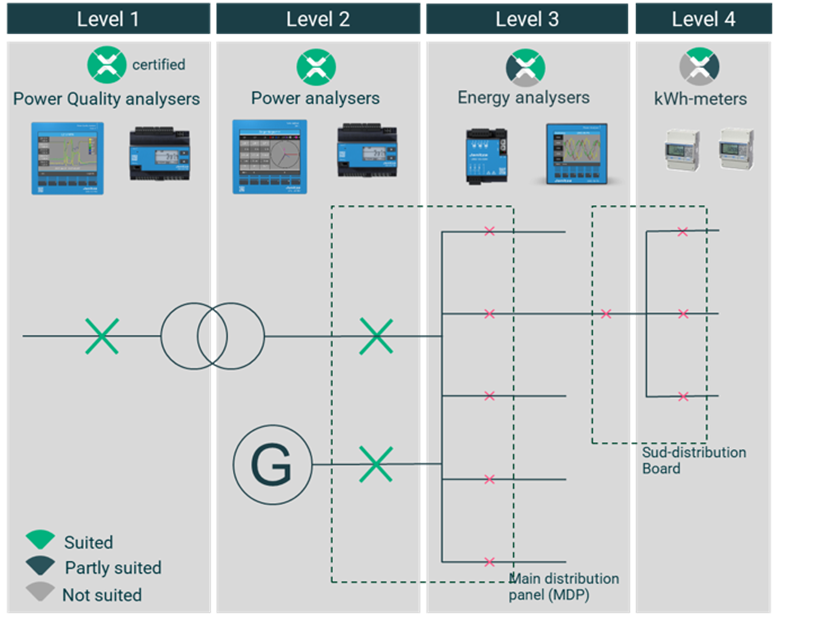
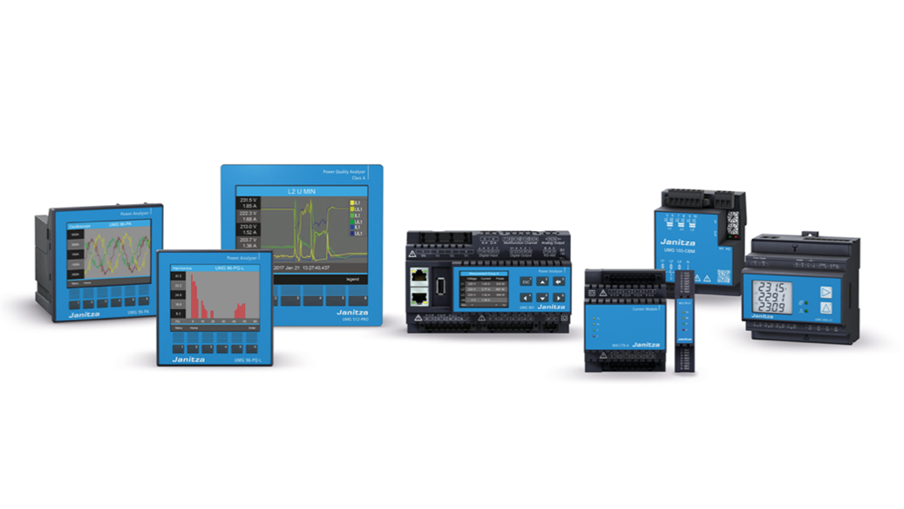
Fortop uses a standardised blueprint for an “installation-wide” measurement system, assigning the most suitable measuring instrument at each level of the electrical installation, including Janitza measurement instruments with a resolution of 50 μs for precise voltage and current sampling.
Measurement levels:
Level 1: Medium voltage incoming fields – Power Quality Analysers
Level 2: Low voltage side of power transformers – Power Analysers
Level 3: Main distribution board outgoing feeders – Energy Analysers
Level 4: Sub-distribution boards and end users – DIN-rail consumption meters or multi-channel meters
Step 2: Continuous Monitoring with gridXpert
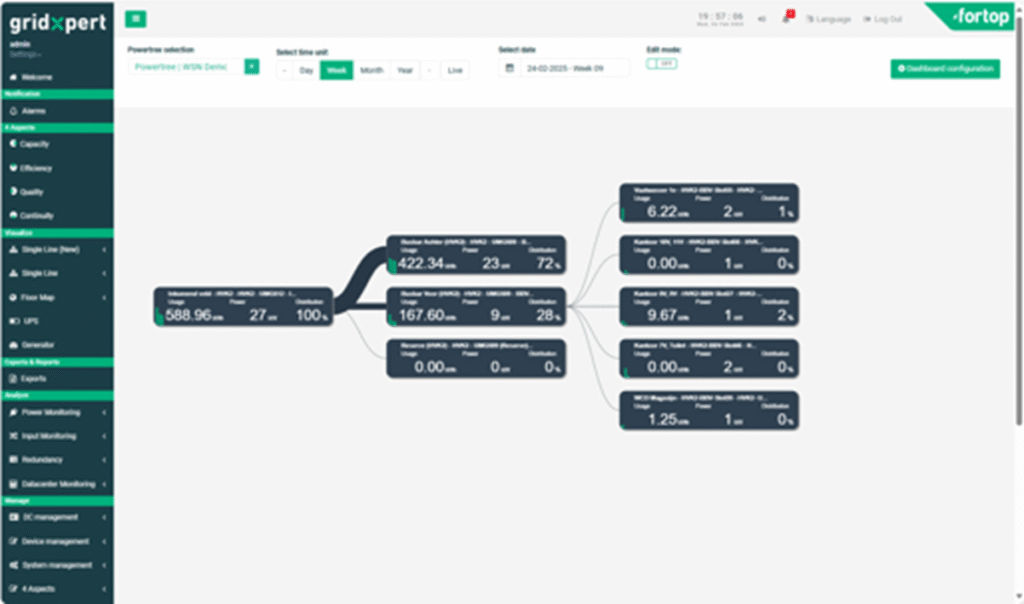
To consolidate all measurement data into a single system and translate it into actionable insights, fortop UK has developed the gridXpert Industrial Edition. This system provides real-time and historical measurement data at a millisecond level. It integrates data from meters, switches, generators, and UPS systems into real-time alerts, visualisations, and reports.
Key features:
- Alarm Manager: Immediate alerts for overloading, voltage failures, and power quality deviations via SMS, email, BMS, or a dedicated smartphone app
- Power Tree Function: Maps real-time and historical phase loads for the entire electrical system, identifying energy waste and optimising capacity
A simple SCADA/Factory Automation System controls building functions but lacks deep energy analytics. Power monitoring adds precision, cost control, and reliability, making it a smarter choice for industrial energy management strategies. This leads to enhanced energy efficiency, cost savings, improved resilience and reliability, compliance with schemes like ESOS, and better, more informed decision making and future planning.
Many facilities already equipped with SCADA choose to expand capabilities by integrating with a new Power Monitoring System (PMS). Issues arise only when facilities attempt to rely solely on a BMS to avoid using a PMS.
Step 3: Improving Power Quality
Once a power quality issue has been identified and thoroughly analysed, the implementation of appropriate power quality solutions becomes essential to mitigate its impact and prevent recurrence. By applying targeted corrective measures, power quality solutions not only restore compliance with standards but also improve system efficiency, extend equipment lifespan, and reduce operational disruptions..
Extra Power Capacity and Fewer Failures with gridXtend Modular Hybrid Filters (FPH)
The FPH Modular Hybrid Filters provide a comprehensive solution for power factor issues. These hybrid filters contain both active and passive components, allowing them to mitigate various power quality problems, including harmonics, supra-harmonics, resonances, and unbalanced phases.
Key benefits:
- Up to 30% more transformer capacity and 50% more generator capacity by filtering reactive power and harmonics.
- Up to 4% energy savings and CO2 reduction by reducing cable and transformer heating and improving overall energy efficiency.
- Lower maintenance costs and protected equipment warranties by minimising voltage pollution.
Voltage Dips Prevention with Stabilisation Systems
Voltage stabilisation systems operate parallel to the load, mitigating short-term voltage dips without requiring full UPS systems. This prevents equipment failures and unwanted current peaks.
Experience Fortop
The team of technical specialists at fortop UK can guide factories and industrial facilities through all aspects of power management, from selecting the right meters to commissioning and maintaining software and active compensation systems, all under one roof.
For further information about fortop’s experience with industrial facilities, visit www.fortop.co.uk.
