


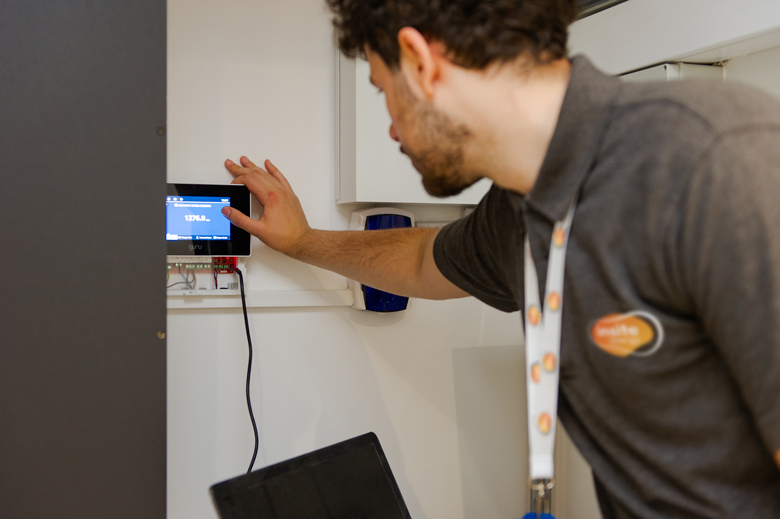

Adam Newman, Insite Energy
In January 2027, the UK’s copper-based ADSL network will be powered-down permanently. Moving forwards, the nation’s landlines and internet connections will all run on full-fibre-optic broadband, which is much faster and more secure than copper, as well as being less prone to interference.
For anyone still relying on ADSL, time is running out to upgrade equipment and connections to avoid system failures and data losses. This is particularly important for heat network billing and management systems as the copper switch-off coincides with a strengthening of regulations designed to ensure greater protection, fairness and charging transparency for heat network consumers. Heat suppliers and heat network operators could face penalties if residents are incorrectly billed, not to mention a host of messy administrative issues.
Any building that is more than 10 years old could be one of the approximately 30% of UK properties still using a legacy copper-based connection. You can check this online at openreach.com/fibre-broadband. If so, you can request a fibre connection from your internet services provider (ISP); it should take around 10 days to two weeks, including installation of an optical network termination (ONT) device, if not already present.
Modern developments and those already served by full-fibre broadband (as indicated on their contracts and bills) won’t be impacted by the demise of ADSL. However, that doesn’t necessarily mean they’ll have the consistent and reliable connections they need for essential services across their site, particularly if they’re relying on wireless solutions.
Complete security and reliability
The only way to ensure robust, uninterrupted, real-time data communication for efficient metering & billing operations is to install a fixed internet connection (FIC) between your energy metering system and your heat network service supplier’s billing and payment infrastructure.
This should be a permanent, hardwired link, ideally in the form of a high-speed FTTP (full fibre to the premises) cable with a fibre-based router connecting to the building’s ONT. Other approaches are possible too, including using existing on-site internet solutions, such as Hyperoptic or local area network (LAN). However, they’re less reliable and cost effective than FTTP.
The FIC should also be a dedicated connection, meaning it’s not shared with other building services such as CCTV, which can consume a lot of bandwidth. For maximum security, connectivity and stability, the solution should also include a static IP address which won’t change each time a device connects to the network, ensuring continuous access to data loggers and pre-pay equipment. And the whole thing should be backed up by a failover 4G multinet roaming SIM for total 24/7/365 resilience.
Internal upgrades
In older properties, it’s possible that some rewiring of legacy copper connections will be needed within and around the site too. Although any internal ADSL network can theoretically still function until 2030, it will be transmitting data at a much slower speed than the fibre link to and from the building.
Therefore, although it can be difficult and costly to replace, because it’s likely to involve removing and refitting fire-stopping materials, it’s a good idea to do it as soon as possible. Situating equipment such as data-collection devices as close as possible to the ONT will help to minimise disruption, but the more work that’s likely to be involved, the more important it is not to leave it to the last minute.
Performance monitoring
It’s not only metering & billing systems that need a failsafe internet connection. Accurate, timely and detailed data from meters and sensors across a heat network is the bedrock of managing energy efficiency.
If there are periods when consumption and performance data is not transmitted, real-time monitoring software won’t work properly, meaning faults and inefficiencies may go undetected for long periods, with costly consequences.
Managing your FIC
It might make sense to hand over the management of your FIC account to your metering & billing provider. They can ensure it’s paid correctly, automatically reacting to any pricing changes without you needing to notify them, with the costs recovered via residents’ energy services tariff. You’re also likely to get things fixed a lot faster if a fault occurs.
It’s worth noting, too, if you’re commissioning a new FTTP connection, your metering and billing provider may be able to do this for you at a lower cost via an ISP broker, meaning the total outlay is the same as commissioning and managing the service yourself.
However you go about it, the process of fitting compliant FICs will be far smoother, quicker and more efficient when done in a considered way. It therefore pays to review your connectivity equipment sooner rather than later to see what upgrades, if any, are needed in the next two years.
This article appeared in the March 2025 issue of Energy Manager magazine. Subscribe here.
