


Rayan Kassis, CEO – Aed Energy
A running joke when I worked at GE Energy was that, in many cities, the emissions guarantee on our gas turbine exhaust air was cleaner than the ambient air going into the intake. That’s how I started my career, at a time when gas turbines were considered clean tech and wind and solar were interesting but yet untested technologies.
A career incarnation later, this time with wind energy pioneer Vestas, that background proved useful to convince sceptical operators that wind was worth deploying on their systems. The only problem was that I went from being a solutions provider, to a “part-of-the-solution” provider. Wind, then later solar, proved a clever way to generate increasingly cheap electricity, but couldn’t be relied on, like gas turbines, to switch on and off on demand. And I was acutely aware of that, which then led me to the promise of concentrated solar power, harnessing the intensity of the sun, paired with thermal storage, to deliver 100% clean energy, on demand. Nice story, the physics was sound. But complexity killed it. Too many moving parts, too reliant on perfect conditions, and especially, too much bespoke engineering on every project. It never scaled.
Essentially, my career has been a search for the same thing: reliable, dispatchable, affordable energy without burning fossil fuels. And what it led to was the realisation that thermal storage, on its core merits, is the first technology I believe can deliver all three, at scale, without the compromises that undermined every previous attempt.
Technology transitions follow a consistent pattern. Early deployments generate performance data. Performance data builds trust and operator confidence. Operator confidence drives purchasing decisions. Which then drive volume and cost reduction. Precisely what happened to wind and solar energy – and not just happened, but delivered an astonishing reality today where renewable energy now contributes to over 30% of global electricity worldwide. Quite a journey from when I started.
So far industrial heat has stubbornly held out on this transition, with massive implications. Heat for industrial processes represents 25 to 30% of global energy demand and emissions. The sectors that drive this are foundational to our modern existence: cement, metals, chemicals, food processing, ceramics, paper, refining. And across Asia, the Middle East and Africa they are expanding, with each new fossil-fuel-dependent facility locking in emissions for twenty to thirty years.
The reason for this is deeply structural. Unlike power assets, an industrial furnace is a vital production asset for these industries. The consequences of failure are direct production and revenue failures. That distinction drives everything — longer capital cycles, higher thresholds of operational reliability, procurement committees designed to be cautious.
Putting on my old operator hat, the evaluation criteria are not complicated: does the system work (can I trust it), can our teams operate and maintain it, and, critically, what happens when it fails at 3AM. These operational considerations are the primary concerns when determining procurement.
Which takes us to the state of fossil fuel alternatives today. Direct electrification exposes operators to price volatility and demands grid capacity that is often unavailable or prohibitively expensive. Hydrogen production costs remain exceedingly high, infrastructure is incomplete, and conversion losses are impossible to ignore. Both may matter eventually, but neither solves the near-term problem.
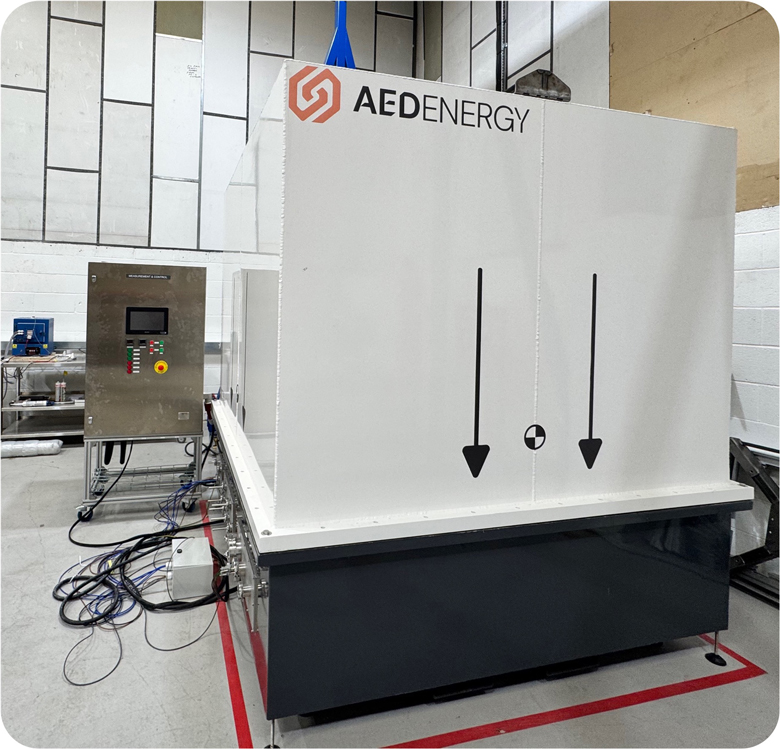
Long-duration thermal batteries present a highly compelling opportunity to deliver reliable, zero-carbon heat through simplicity, not sophistication. The process is, as one cleantech commentator put it, “absurdly simple”. Convert electricity to stored heat — like a giant toaster — when power is cheap. Deliver it as direct heat to industrial processes, 24/7, on demand. Stable, abundant, cheap materials — no complex chemistry, no constrained supply chains. Unlike my past experience with CSP, nothing is reinvented on every project.
The numbers work too. In our extensive modelling of thermal storage against all types of fossil fuel burners, in optimal conditions with low electricity prices, we deliver a 20-year levelised cost of heat below $25/MWh-th, versus a $20–70/MWh-th range across fossil fuel types — natural gas, LNG, heavy fuel oil, petcoke. This is not hype. These are hard numbers. With field performance data to back them up over the coming years, I believe thermal storage will do to industrial heat what coal once did to manufacturing — transform it entirely. The bottom line is simple: if we can deliver the same heat, reliably, at the same or better cost than your fossil fuel incumbent, what is left to decide other than trusting the technology?
Which brings us back to the power of simplicity. The diesel engine did not dominate because it was elegant. It dominated because it worked everywhere, under imperfect conditions, maintained by the local technician. That is the standard thermal storage must meet — and it is achievable.
Energy transitions do not announce their tipping points. They arrive when enough systems are working in enough places that the old model stops making economic sense. I believe industrial heat is rapidly moving toward that moment.
This article appeared in the April 2026 issue of Energy Manager magazine. Subscribe here.
