



Mark Longley, Technical Operations Director, t-mac.co.uk
Energy management often comes down to the same question: can you see what is happening in your building, and can you act on it quickly? A boiler cycling unnecessarily, a pump running out of hours, or a temperature issue that keeps returning. Each may look small in isolation, but across a building or portfolio, the impact can be significant.
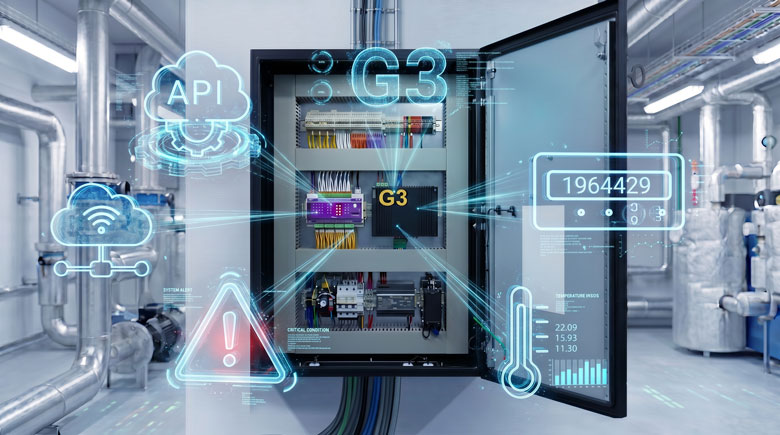
t-mac’s cloud-connected BEMS panel is designed to make a real and practical difference in this area.
In practice, the panel has been installed across hotels, schools, commercial properties and public sector buildings to control and monitor boilers, pumps and other plant room equipment.
Across those environments, installed panels are already being used to bring plant room performance into view through the cloud portal. Live alerts are generated when monitored points fall or rise outside specification, giving teams earlier visibility of issues that may otherwise go unnoticed. These alerts can also inform changes to control strategy and how sites are operated.
Rather than relying on a large, traditional controls project, the panel provides a lower-cost route into building energy management. Installation is deliberately simple, helping reduce disruption and typically offering a meaningful cost saving compared with conventional BEMS solutions.
That practical balance of functionality and cost was one of the reasons t-mac’s BEMS panel was selected as the controls solution for the refurbishment of the Jockey Club at Goodwood Racecourse. As part of the project, the entire plant room was replaced, with the system installed by the M&E Contractors and commissioned remotely.
Ease of use is just as important. Through a cloud-based dashboard, users can view plant performance, equipment status, alarms, temperatures and historic records without needing to be on site. The interface is built to make energy management more accessible, not more technical.
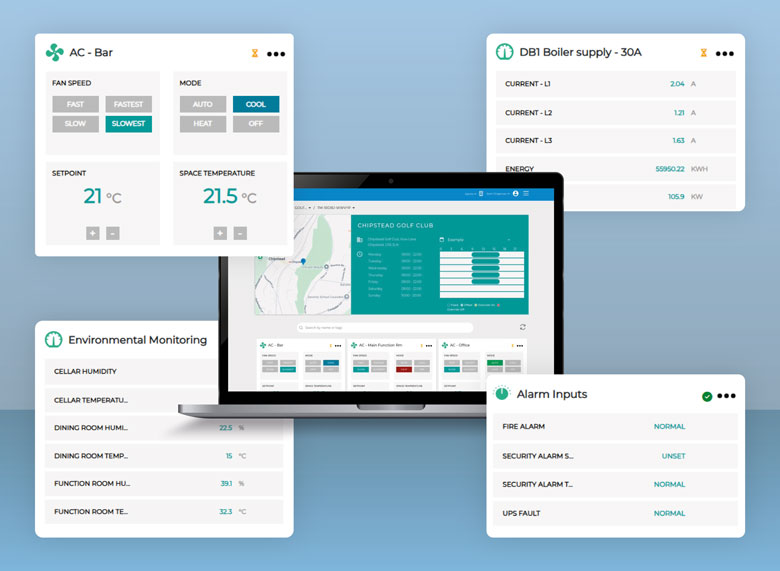
This accessibility also extends to configuration. Simple logic can be programmed quickly, and dashboards or control strategies can be added with significantly less engineering than would traditionally be required. By reducing the work required across both hardware and software, the panel can offer a significant cost saving at both ends of the journey.
The real strength, however, is flexibility. As a primarily software-led solution, t-mac’s BEMS panel can be integrated into new or existing infrastructure and scaled from small monitoring requirements to wider multi-site control. With API-integration functionality, it can also connect with other platforms and data sources, helping organisations build a clearer view of how buildings are performing.
For businesses working towards decarbonisation, optimisation and cost control, that visibility is critical. A BEMS panel will not solve every challenge on its own; however, it will go a long way in energy usage reduction, and will also help identify issues earlier supporting better decisions and turning building data into action.
Join t-mac Technologies at the Smart Buildings Show, 14-15 October. Visit us at stand D28.
This article appeared in the July/August 2026 issue of Energy Manager magazine. Subscribe here.
