


Across the public sector, organisations are investing heavily in decarbonisation strategies, renewable technologies and estate upgrades designed to improve long-term energy performance. Yet one issue continues to undermine those ambitions, the ongoing challenge with managing the ageing building fabric.
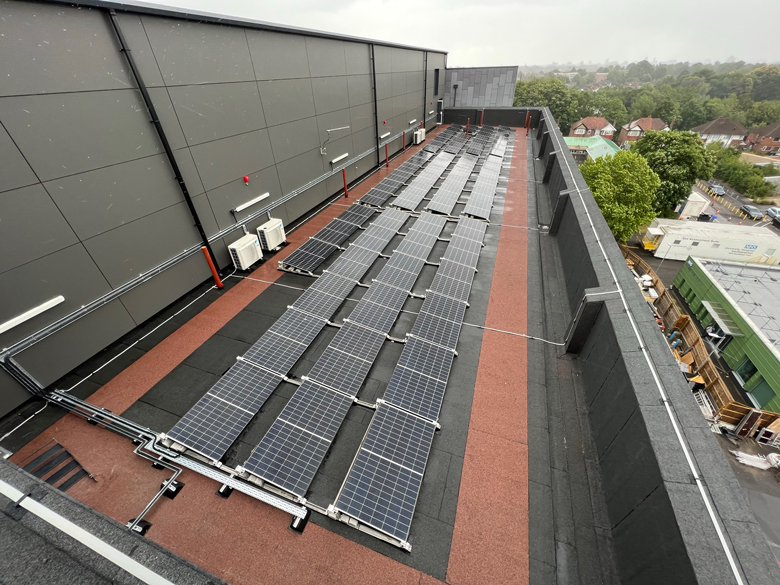
Solar PV systems are increasingly being installed across schools, healthcare buildings and local authority estates, but the condition and expected lifespan of the roof beneath them is not always assessed with the same long-term view. For estates and energy managers, that creates a growing challenge around risk, resilience and whole-life value.
As Garland UK marks 25 years in the UK market, the company is reflecting on how expectations around roofing systems have changed across public sector estates over the past two decades.
Since its establishment in 2001, Garland UK has supported projects across healthcare, education and the wider public sector, providing roofing and building-envelope systems designed around long-term asset protection and lifecycle performance.
Over that period, one of the clearest shifts has been the growing recognition that energy-efficiency strategies cannot succeed without a reliable building fabric beneath them.
Why reactive maintenance undermines long-term estate performance
Many public-sector buildings continue to rely on ageing roofing infrastructure that is maintained through repeated short-term repairs. While these interventions may temporarily address immediate problems, they rarely support wider objectives around operational efficiency, lifecycle cost or long-term decarbonisation.
For estates teams operating under budget pressure, reactive maintenance can often become the default response. However, over time, repeated patch repairs can increase operational expenditure while delaying more strategic investment decisions.
The issue becomes more significant as organisations look to integrate renewable technologies into ageing estates. Solar PV systems are typically expected to perform for decades, but in many cases, the roofing systems beneath them were never designed with the same lifespan in mind.
Over the past 25 years, Garland UK says one of the biggest changes within public sector estates has been the shift towards whole-life asset planning, with greater emphasis on preventative maintenance, lifecycle performance and long-term resilience.
That approach relies on early condition assessment, robust specification and continuity throughout project delivery. Each project is supported by a dedicated Technical Manager from survey through to completion and aftercare, helping estates teams maintain oversight throughout the asset’s life.
As Managing Director Tim Jones explains, “We’ve always believed that the real value of a roofing system isn’t measured on the day it’s installed. It’s measured over decades of performance.”
That emphasis on longevity is becoming increasingly relevant as public sector organisations look to avoid short-term maintenance decisions that can ultimately undermine wider energy and estate strategies.
Importance of fabric-first decarbonisation
The role of roofing systems within public sector estates has evolved significantly over the past decade. Roofs are no longer viewed simply as weatherproofing systems but increasingly as strategic assets that support broader energy, sustainability, and resilience objectives.
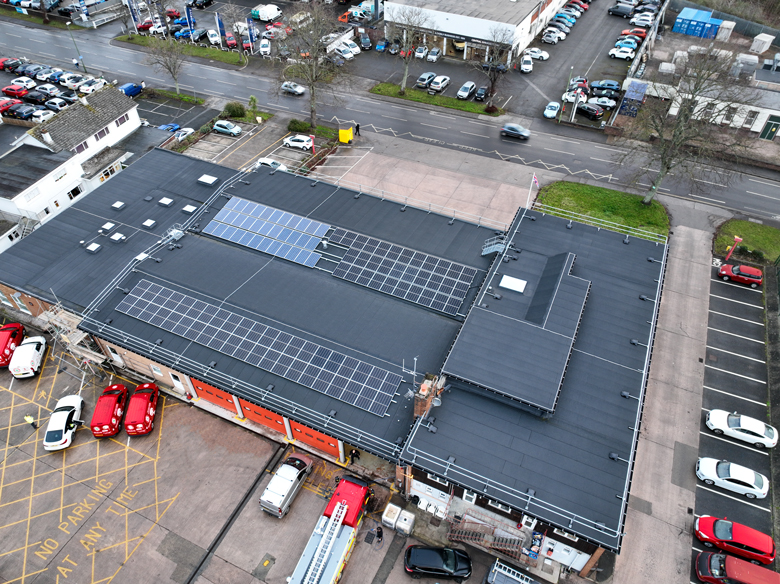
In response to these changing requirements, Garland UK has expanded its offering over the past 25 years to include green roofing technologies and integrated solar PV systems alongside traditional waterproofing solutions.
For estates and energy managers, however, decarbonisation is not simply about installing new technologies. The long-term performance of the building fabric itself is becoming equally important, particularly as public sector organisations seek to maximise the lifespan of existing estates while reducing operational carbon.
This is driving greater interest in fabric-first approaches, where asset condition, thermal performance and lifecycle durability are considered alongside renewable energy generation.
Across sectors such as healthcare and education, where operational disruption can carry significant consequences, longer-term thinking is becoming increasingly important.
Looking ahead
With public sector organisations under continued pressure to reduce emissions, improve energy efficiency and extend the life of ageing estates, the need for more strategic approaches to roofing and building-envelope performance is unlikely to diminish.
Looking ahead, Garland UK believes the sector will continue to move away from reactive maintenance towards longer-term lifecycle management of roofing assets, helping organisations reduce operational disruption, improve resilience and make more effective use of limited capital investment.
As Tim Jones states, “Our goal has always been to do the job properly, to support clients with honest technical advice, design systems that outlast their guarantees, and deliver service people can rely on.”
For public sector estates and energy professionals, the challenge is no longer simply to improve energy performance in isolation. Increasingly, it is about ensuring the buildings themselves are capable of supporting long-term decarbonisation goals.
This article appeared in the June 2026 issue of Energy Manager magazine. Subscribe here.
